



YouTube’s algorithm is a fickle beast. One day, you’re soaring through the recommended feed like an untouchable content deity, and the next, you’re buried so deep in the void that even your most loyal subscribers can’t find you. If it feels like YouTube is gaslighting you, that’s because it is—except it’s not personal. It’s just math, machine learning, and a bit of corporate chaos.
Understanding the algorithm isn’t about memorizing secret formulas; it’s about recognizing patterns, exploiting engagement signals, and outmaneuvering YouTube’s ever-evolving preference for “optimal user experience.” So, let’s dissect this digital enigma and figure out how to make YouTube’s AI your unknowing accomplice.
YouTube’s Algorithm: A High-Stakes, Ever-Shifting Game of 4D Chess
The only thing consistent about YouTube’s algorithm is its inconsistency. What worked in 2015 (view count supremacy) is a joke in 2025, where retention time and deep learning-driven recommendations reign supreme. But how did we get here?
The Evolution of YouTube’s Algorithmic Chaos
Once upon a time, the algorithm was simple: the more views, the better. Clickbait was king, and deceptive thumbnails reigned. Then YouTube realized people hated this, and in a dramatic act of self-preservation, the platform pivoted. Watch time became the new currency, and creators who tricked users into clicking but failed to keep them watching got swiftly exiled from YouTube’s graces.
Enter the modern era, where engagement metrics like likes, comments, and even the amount of time users spend elsewhere after watching your videos contribute to your ranking. Today, YouTube’s machine learning models are essentially trying to predict one thing: Will this video keep a user on YouTube longer? If the answer is yes, congratulations—you get algorithmic love. If not, enjoy your banishment to the depths of YouTube purgatory.
The Core Ingredients of YouTube’s Algorithm Soup
At its core, YouTube’s algorithm is obsessed with four things:
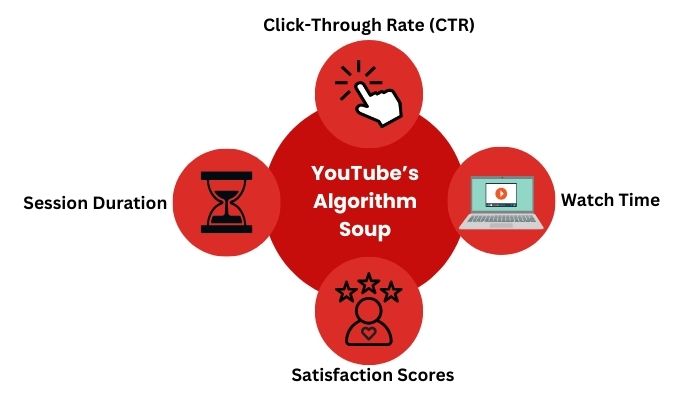
- Click-Through Rate (CTR): Are people clicking your video, or are they scrolling past it like an unwanted LinkedIn request?
- Watch Time: How long do viewers actually stick around? YouTube would rather have 1,000 people watch for 10 minutes than 10,000 people watch for 10 seconds.
- User Satisfaction Scores: Surveys, feedback, and secret AI-driven happiness calculations determine whether YouTube thinks users actually like what they’re watching.
- Session Duration: Did your video lead viewers down a YouTube rabbit hole? If yes, congrats! YouTube rewards you for keeping people inside its ecosystem.
CTR: The Art of Baiting Without the Clickbait (Mostly)
Click-Through Rate is the first test of a video’s success. No matter how incredible your content is, if people don’t click, the algorithm won’t care. But how do you boost CTR without becoming the human embodiment of a BuzzFeed headline?
Thumbnails: The Unspoken Battleground
Your thumbnail is the first impression—your make-or-break moment in the war for attention. Bright colors, contrast, and an expressive face (yes, even if it makes you look like you just stubbed your toe) can drastically improve clicks. Red and yellow are scientifically proven to grab attention, while text overlays need to be punchy, not wordy. If your thumbnail doesn’t tell a story at a glance, it’s a wasted opportunity.
Titles: Manipulating Humans and Machines Simultaneously
Titles aren’t just for humans; they’re for YouTube’s AI overlords, too. You need to balance intrigue with clarity. Curiosity gaps work—titles that hint at something unexpected or unanswered tend to perform well. Numbers, brackets, and parentheses add credibility, while power words like “revealed,” “secret,” or “exposed” trigger the primal parts of a viewer’s brain that need to know what’s inside. Just don’t go full-on “SHOCKING! YOU WON’T BELIEVE WHAT HAPPENS NEXT” or you’ll be lumped in with the algorithmic exiles.
The Cult of Watch Time: Keeping Eyeballs Glued to Your Content
Congratulations! They clicked. Now the real battle begins: making sure they don’t leave in the first 30 seconds.
The First 30 Seconds: The Drop-Off Danger Zone
If your intro drags, you’re done. The first few seconds should promise value, deliver quick dopamine hits, and make it immediately clear why watching to the end is worth it. Long-winded intros, unnecessary disclaimers, or generic greetings (“Hey guys, welcome back to my channel!”) are where retention goes to die.
Pacing: The Unseen Algorithmic Lever
Slow pacing kills watch time. If your video doesn’t move at a brisk, engaging pace, people will click away faster than YouTube can push them to the next competitor. Jump cuts, energetic delivery, and fast-moving visuals help keep the modern attention span engaged. Even in long-form content, smart pacing decisions determine whether users stay until the end—or leave halfway through to watch an easier dopamine fix.
Engagement Metrics: The Algorithm’s Love Language
YouTube wants to keep users happy, and it uses engagement as a proxy for satisfaction. The more people like, comment, and interact with your video, the better the algorithm treats you.
The Comment Section: Encouraging Digital Chaos
Comments aren’t just a vanity metric—they’re an algorithmic signal that your video sparks discussion. One trick? Ask a polarizing question. Controversy fuels comments, which in turn fuels recommendations. Another underutilized tool? The pinned comment. Use it to reinforce engagement—whether by posing a question, linking to another video, or adding extra context. And don’t forget to heart comments—yes, YouTube’s AI notices when creators interact.
Likes and Dislikes: Even Haters Boost Your Metrics
Likes are great, but here’s the kicker: dislikes don’t actually hurt you. In fact, they count as engagement. If people care enough to dislike, YouTube assumes the video is important enough to spark reactions. The real enemy? Indifference.
The Secret Weapon: Leveraging AI and Data to Outthink the Algorithm
If YouTube’s algorithm is AI-driven, then why aren’t you using AI tools, too?
YouTube Analytics: Your Cheat Sheet for Growth
Your Analytics tab isn’t just for decoration. CTR heatmaps show where your thumbnails are succeeding (or failing), retention curves pinpoint drop-off points, and A/B testing thumbnails can reveal shocking improvements with tiny changes. Ignore this data at your own peril.
External Signals: Does YouTube Notice Off-Platform Traffic?
Yes. YouTube tracks whether people are sharing your videos externally—Twitter, Reddit, even email. Strong external signals can boost your video in search rankings. SEO still matters, but in 2025, it’s less about stuffing keywords into descriptions and more about audience behavior indicators.
There Is No Secret Sauce, But Here’s What Actually Works
If you’re looking for a one-size-fits-all YouTube hack, bad news: there isn’t one. The algorithm is a living, evolving system that rewards adaptation, persistence, and smart optimization.
Success on YouTube comes down to consistency, audience understanding, and constant iteration. Post regularly, experiment ruthlessly, and make peace with the fact that what works today might not work tomorrow.
And remember—mastering YouTube’s algorithm isn’t about beating the system. It’s about making the system think you’re exactly what it wants.


.jpeg)