Agriculture and Farming
B2B video production for agriculture and Farming: paid social video, brand story video, and documentary video, managed (VID Operate) or fixed-scope (VID Project).
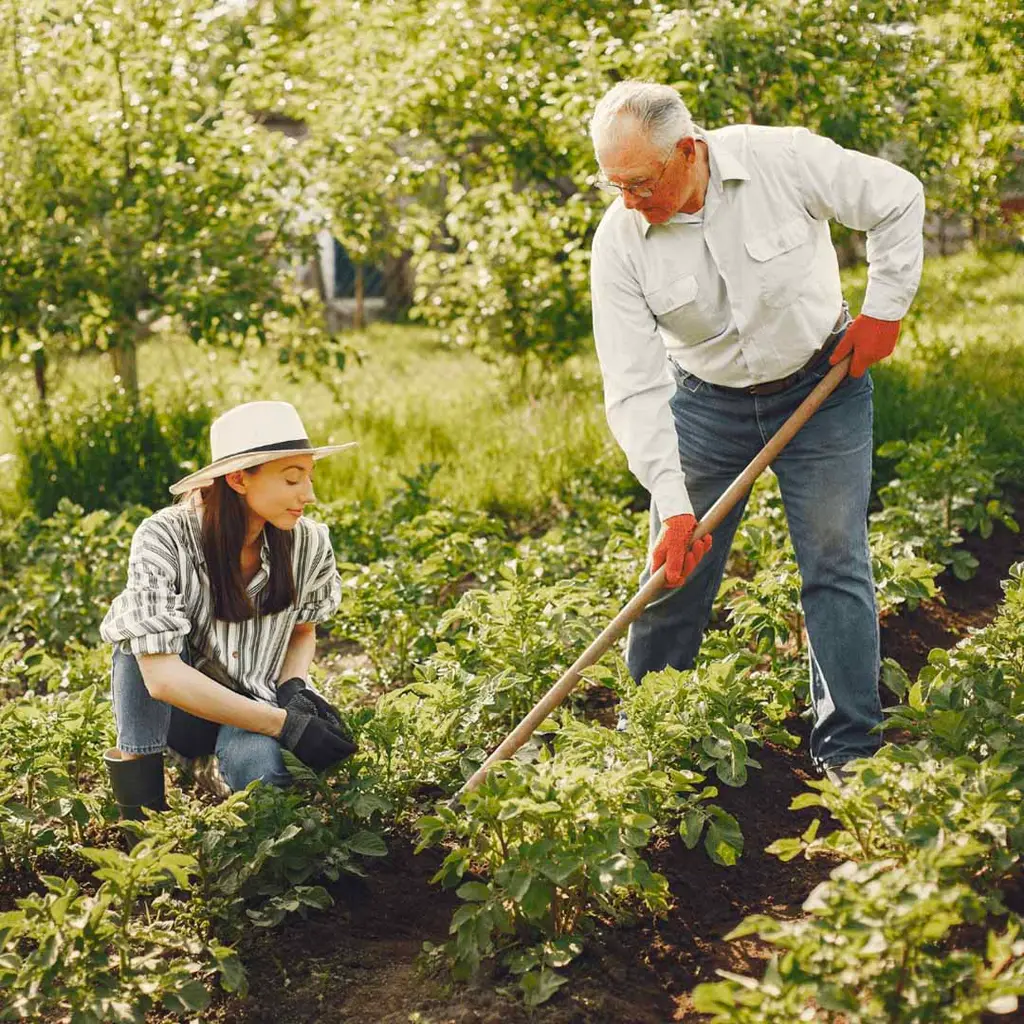
AgTech video production built to make agricultural innovation clear.
VID produces product demos, farmer education, investor content, and technical explainers through an ongoing video system that helps growers, partners, and investors understand the value and act faster.
The challenge
Agriculture and AgTech companies are producing the innovations that will determine how the world feeds itself — and communicating that innovation clearly, credibly, and systematically to the farmers, agronomists, retailers, investors, and policymakers who need to understand it is the communications challenge most of them have never fully solved.
- Your technology or product is genuinely differentiated but the content that represents it is not: The precision agriculture platform, the crop protection chemistry, the soil health program, the seed genetics, the irrigation management system, or the supply chain traceability solution that distinguishes your organization from every competing approach is invisible in a product brochure and an agronomic data table. The content that should make those differentiators visible to farmers, agronomists, retail partners, and institutional investors — field demonstration video, technology mechanism explanation, grower testimonial documentation — either does not exist, was produced once and is now outdated, or does not meet the production standard the audience expects from a company claiming to solve a consequential agricultural challenge.
- Farmer and grower adoption requires trust that content must build before the first sales call: The farmer evaluating a new crop protection product, the grain operation considering a precision agriculture platform, and the specialty grower assessing a new seed variety are all making consequential decisions with significant financial and operational implications for their farming business. The content that builds the trust, communicates the agronomic credibility, and demonstrates real-world performance in conditions that mirror the farmer's specific operation is the content that determines whether your organization gets a trial — and almost none of it is being produced systematically or distributed through the channels where farmers are actually researching their input and technology decisions.
- Seasonal content requirements create production bottlenecks that the current team cannot consistently meet: Agriculture is a seasonal business — and the content that supports planting season decisions needs to be ready before planting begins, the content that documents growing season performance needs to be captured when the crops are in the field, and the content that communicates harvest results needs to be produced and distributed before the next planning cycle begins. Most agricultural organizations are producing seasonal content reactively — the production trip is scheduled when someone has time, the field documentation is captured informally, and the content that should be building grower confidence and retail partner conviction is delayed, inconsistent, and frequently out of season by the time it is distributed.
- Retail and distribution partner content is inconsistently produced and difficult to keep current: Agricultural retail partners, agronomic advisors, and distribution network members are the primary channel through which most agricultural products and technologies reach the farmer — and their ability to recommend a product they have not personally trialed depends entirely on the quality and the recency of the content the manufacturer or developer provides. Most agricultural organizations are producing retail and distribution partner content reactively — a new product launches, a new trial result is published, a new agronomic claim is validated — and the content that should be equipping the channel to sell those products with confidence is delayed, inconsistent, and difficult to access at the moment of the agronomic conversation.
- Investor communications for AgTech companies do not reflect the commercial progress or the agronomic validation: The trial results, the adoption metrics, the yield impact data, and the commercial traction that make an AgTech investment thesis compelling are communicated in pitch decks and financial models — formats that ask investors to take agronomic claims on faith without the field documentation, the grower testimonial, and the visual evidence of real-world performance that would make those claims credible to an investor who has never been to the field. The investor communications that should be building confidence in the technology roadmap and the commercial execution are instead demonstrating the absence of a systematic communications infrastructure.
- Sustainability and regenerative agriculture claims require more evidence than they used to: The proliferation of sustainability claims in the agricultural market — from carbon sequestration programs to regenerative certification schemes to precision application efficiency claims — has made every environmental and sustainability assertion more difficult to communicate credibly to the sophisticated audiences evaluating them. The agricultural organizations whose sustainability communications are most credible in this environment are the ones providing the most specific, the most documented, and the most independently verifiable evidence of the outcomes they claim. Video is the format that provides that evidence most compellingly — because it shows the field, the soil, the crop, and the farmer's experience in a format that is significantly more difficult to fabricate than a written sustainability report.
The opportunity
Agriculture is the industry where the gap between laboratory performance and field performance is the most consequential commercial distinction in any product category — and video is the format that closes that gap most efficiently for every audience that needs to evaluate agricultural products and technologies.
A crop protection product with a 94 percent efficacy rating in controlled trials is a claim. A video of that product applied to a commercial farmer's field — filmed across the growing season, showing the treated and untreated comparison at 30 days, 60 days, and harvest — is evidence. An investor who reads about the trial data and an investor who watches the field performance documented in real growing conditions are in fundamentally different positions in their evaluation. The video is what moves the evaluation from the claim to the conviction.
This matters because agricultural purchasing decisions are among the most conservative in any industry. Farmers are making decisions that affect their entire season's yield, their family's income, and the long-term health of the land they are responsible for — with input costs that can represent a significant portion of their operating budget. The trust required to adopt a new product, a new technology, or a new agronomic practice is earned through accumulated evidence — field demonstrations, grower testimonials, and documented performance in conditions that mirror the farmer's specific operation, crop, and climate. Video is the format that accumulates that evidence most efficiently and distributes it most compellingly to the audiences who need it.
The AgTech dimension adds the investor communications challenge that is specific to companies trying to communicate the commercial potential of agricultural innovation to institutional investors who may not have deep agricultural domain expertise. The AgTech investor who understands the technology at the engineering level but cannot evaluate the agronomic claim needs to see the technology working in the field — with a farmer explaining what it means for their operation in plain language, with the performance data visualized against the baseline, and with the commercial traction documented in a format that translates agricultural outcomes into financial outcomes. Video is the format that makes that translation most effectively.
The channel and distribution dimension is also significant and underutilized. The agronomic advisor who recommends a new product to a farmer is making a professional credibility commitment — and the quality and the specificity of the content that supports that recommendation determines whether the advisor feels confident enough to make it. An agronomy advisor who has watched a professional field demonstration video of a product performing in conditions similar to their growers' fields is in a completely different position than one who has read a product label and a trial summary. The content investment that equips the channel to recommend with confidence is the content investment with the highest return in agricultural marketing.
How VID works with Agriculture and Farming teams
VID is your Video Department: one team for strategy, production, editing and publishing. VID Operate is a managed Video Department for B2B companies, starting at $5,000/month with a 90-day initial engagement and no mandatory installation fee. VID Project is fixed-scope video production for a defined need, quoted by scope.
Formats worth considering for agriculture and Farming include paid social video, brand story video, documentary video, and educational video. Supporting services include video strategy, video production, and video editing & post-production.
The process is the same for every engagement: a Video Strategy Call to define the goal, audience and channel; a written scope; planning and scripting with your subject-matter experts; production, on-site when the project is scoped for it; then editing, review and publishing.
Related portfolio work: Metamora Equine Brand Video.
What kinds of video work best for agriculture and Farming?
Start with the buying questions your prospects ask before they talk to sales. For agriculture and Farming, formats worth considering include paid social video, brand story video, documentary video, and educational video. We recommend the mix on your Strategy Call, based on your goal and audience.
Should we start with VID Operate or VID Project?
Choose VID Operate if you want video to run as an ongoing program (from $5,000/month, 90-day initial engagement, no mandatory installation fee). Choose VID Project for a defined production with a fixed scope and quoted price. Many teams start with a Project and move to Operate once video becomes a regular need.
Can VID film on-site?
Yes, when a project is scoped for it. Access, schedule, safety requirements and logistics are agreed in the scope before filming, and planning and editing happen remotely. For technical or regulated environments, your team stays the authority on site rules and accuracy; we build review and approval into the plan, and we do not claim industry certifications.
Is VidOS included?
VidOS™ is a separate platform; there is no public price, so request access to see how it fits. It is separate from VID Operate and VID Project.
Next step: Get your video plan or book a Video Strategy Call.
What clients say
"I just can't say enough good things about Dallin and VID. If you're thinking about doing video in your business just hire [them]. I'll definitely hire him again cause he just made everything super easy and really fun and professional. I love working with people where they own their zone of genius. It made my life a lot easier!"
 Adrienne DorisonRun Like Clockwork
"Thank you everyone for making yesterday such a success! We should have a ton of great content to work with - major shoutout to VID for working through the craziness of life at an animal hospital!"
 Hamilton KingSmith Animal Hospital
$283,500 Sales, 2500+ Leads — "We had 1.2k people opt into the sticky note challenge video series. There were 1.3k people who ended up registered for our webinars (we 3x'd our usual opt-ins). This resulted in 63 sales for Accelerator that has a $4500 pay-in-full price."
Run Like ClockworkBusiness Coaching“We had a HUGE launch and saw an exciting amount of traffic come to the summit landing page [and video]. Conversion rates were above 60%, and an impressive amount of users signed up for Teachable on the spot!”
 TeachableSoftware Company
"Seamlessly came into my team and helped with messaging and thinking through the story and pain points that my audience have."
 Teri IjeomaTrade and Travel
Recommended video formats & styles
Paid Social Video
Acquire qualified pipeline through paid social channels at a sustainable and improving cost per acquisition.
Brand Story Video
Build trust before sales contact. Answer the question every new prospect asks first.
Documentary Video
Build category authority and brand credibility through cinematic, narrative-driven storytelling.
Educational Video
Educate at scale and reduce support + onboarding friction



The right fit
VID's agriculture and AgTech clients share a specific profile. They are established organizations — crop protection companies, seed developers, precision agriculture platform providers, soil health and fertility companies, agricultural equipment manufacturers, supply chain and traceability technology providers, and regenerative agriculture program administrators — with genuine agronomic or technological differentiation and a communications challenge that their current content operation is not fully solving.
You are the right fit if:
- You are a crop protection, seed, or specialty input company whose product performance in real field conditions is your primary commercial differentiator — and whose current content does not document and distribute that performance at the level the agronomic audience evaluating it requires
- You are a precision agriculture platform, farm management software, or agricultural data company whose technology's value to the farmer is demonstrated through operational efficiency, yield improvement, or input optimization — and whose product demonstration content does not yet communicate that value at the system level in the operational context that matters to the farmer evaluating it
- You are an AgTech company at Series A through Series C whose investor communications, grower adoption content, and retail partner enablement materials need to be more systematic, more professionally produced, and more consistently distributed than your current team can achieve alongside the primary product development and commercial work
- You are an agricultural input or technology company whose retail and distribution channel is not equipped to recommend your products with confidence because the content that supports the agronomic recommendation conversation is outdated, inconsistent, or difficult to access at the moment it is needed
- You are a regenerative agriculture program, a carbon sequestration initiative, or a sustainable agriculture certification organization whose environmental and agronomic claims need to be documented and communicated to the corporate buyers, institutional investors, and regulatory audiences that are evaluating them with increasing sophistication and skepticism
- You are an agricultural organization preparing for a major commercial moment — a new product launch, a new market entry, a significant trial result announcement, or an investor raise — whose communications infrastructure needs to be ready before the moment rather than assembled under the pressure of the announcement