Arts and Entertainment
B2B video production for arts and Entertainment: paid social video, brand story video, and documentary video, managed (VID Operate) or fixed-scope (VID Project).

Arts and entertainment video production built to keep audiences engaged and content moving consistently.
VID produces brand content, artist promotion, event video, audience growth, and sponsor activation through an ongoing system that keeps your organization publishing consistently.
The challenge
Arts and entertainment organizations have the most inherently compelling content in any category — and almost no systematic way of producing, organizing, and distributing it consistently enough to grow the audience and the revenue that sustains the work.
- Content volume requirements exceed what any team can produce without a system: An arts or entertainment organization is expected to publish content across Instagram, TikTok, YouTube, Facebook, and owned channels — before, during, and after every production, every event, and every season. The demand is relentless. The production infrastructure to meet it consistently, at a professional standard, without burning out the creative team is something almost no organization has built. The result is high-effort content that is inconsistent in quality, reactive in scheduling, and impossible to sustain at the cadence that platform algorithms and audience development both require.
- Sponsor and donor activation video is underdelivered and undersold: Sponsorship and major donor revenue depends on demonstrating value — and video is the highest-value activation format available. A correctly produced and distributed sponsor activation video reaches the organization's audience, the sponsor's audience, and the platform's algorithmic distribution simultaneously. Most arts organizations are producing sponsor activation content that undersells the audience reach, underutilizes the video format, and underreports the performance metrics that would justify higher sponsorship fees at renewal and higher gift amounts in the next campaign.
- Behind-the-scenes and production content is captured but never systematically produced: Every rehearsal, every installation, every production day, and every opening night is a content opportunity. The footage exists. Some of it gets published. Most of it disappears into storage without becoming the short-form content, the documentary series, the donor stewardship asset, or the audience development video it could have been. There is no documented workflow for turning the raw content opportunity of an arts organization's daily operations into a systematic content library that serves every distribution need.
- Artist and creative talent content depends on access that is never scheduled systematically: The artists, performers, directors, and creative leaders whose personal brands, authentic perspectives, and on-camera presence are the primary content asset of any arts organization are available for content production intermittently, inconsistently, and usually without a documented brief or a production plan that makes the most of the access when it is available. The result is content that captures the person but misses the story — filmed without a commercial objective, published without a distribution strategy, and never connected to the organizational content calendar that would make it compound.
- Audience development content does not reach new audiences systematically: The people who already love the organization and attend every production do not need to be convinced. The people who have never heard of the organization, who have never attended a performance or visited an installation, and who would become loyal audiences and donors if they could be reached effectively — those people are not being reached systematically. The content that would reach them — the documentary short about the artistic process, the behind-the-scenes series that makes the work accessible, the artist interview that communicates the human story behind the production — either does not exist or is not being distributed through the channels where new audiences spend their attention.
- Nothing connects content output to revenue: Content is produced. Engagement is reported. The connection between a specific piece of content and a specific ticket sale, a specific donor acquisition, a specific membership conversion, or a specific sponsorship renewal is invisible — because the attribution infrastructure that connects content investment to business outcomes has never been built. The development team reports donor engagement. The team reports social impressions. The leadership team asks for revenue impact. The conversation is frustrating for everyone.
The opportunity
Arts and entertainment is the only sector in which the product itself is an experience — and in which the content that communicates that experience is the primary mechanism for building the audience, the donors, and the community of support that sustains the work.
The performing arts organization whose audience development strategy is a season brochure and a direct mail campaign is competing against every other claim on its prospective audience's attention and time with the weakest possible format. The entertainment company whose sponsor activation content is a logo placement and a social media tag is leaving most of the value of its audience relationship on the table. The arts organization whose content program is reactive, inconsistent, and person-dependent is not building the compounding audience relationship that the sustainability of the work ultimately requires.
Video is the format that communicates the experience of art most effectively to the people who have not yet had it — because it conveys the emotional reality of a performance, the intellectual engagement of an installation, and the human story of the creative process in a way that no written description and no static photograph can replicate. A sixty-second video from inside a rehearsal that captures the moment a performance comes together communicates something that a season preview brochure cannot — the specific human experience of what it feels like to be in the room when great work is being made.
This is the audience development argument for arts and entertainment video. Every person who watches that rehearsal clip and feels something — curiosity, excitement, the specific pull of an art form they have not yet experienced — is a potential audience member, a potential donor, and a potential community advocate for the organization's work. The organizations that capture and distribute those moments systematically are the organizations that grow their audiences beyond the people who already know them.
The revenue argument is equally significant. The arts organization that can demonstrate the specific audience reach, engagement quality, and community impact of a sponsorship activation video is the organization that can command higher sponsorship fees, longer sponsorship terms, and more productive partnerships. The organization that can connect a specific piece of donor stewardship video to a specific major gift renewal is the organization that can build a major gifts program on evidence rather than intuition. The organization that can show a board that content investment produces measurable ticket sales, membership conversions, and donor acquisitions is the organization that can make the case for a real communications budget.
How VID works with Arts and Entertainment teams
VID is your Video Department: one team for strategy, production, editing and publishing. VID Operate is a managed Video Department for B2B companies, starting at $5,000/month with a 90-day initial engagement and no mandatory installation fee. VID Project is fixed-scope video production for a defined need, quoted by scope.
Formats worth considering for arts and Entertainment include paid social video, brand story video, documentary video, and educational video. Supporting services include video production, video editing & post-production, and video strategy.
The process is the same for every engagement: a Video Strategy Call to define the goal, audience and channel; a written scope; planning and scripting with your subject-matter experts; production, on-site when the project is scoped for it; then editing, review and publishing.
See how VID has worked with arts and Entertainment clients: Seabourn and Princess Cruises.
Related portfolio work: Princess Cruises Employee Story Video — Angela and 'Magic to Do' Onboard Musical Brand Video.
What kinds of video work best for arts and Entertainment?
Start with the buying questions your prospects ask before they talk to sales. For arts and Entertainment, formats worth considering include paid social video, brand story video, documentary video, and educational video. We recommend the mix on your Strategy Call, based on your goal and audience.
Should we start with VID Operate or VID Project?
Choose VID Operate if you want video to run as an ongoing program (from $5,000/month, 90-day initial engagement, no mandatory installation fee). Choose VID Project for a defined production with a fixed scope and quoted price. Many teams start with a Project and move to Operate once video becomes a regular need.
Can VID film on-site?
Yes, when a project is scoped for it. Access, schedule, safety requirements and logistics are agreed in the scope before filming, and planning and editing happen remotely.
Is VidOS included?
VidOS™ is a separate platform; there is no public price, so request access to see how it fits. It is separate from VID Operate and VID Project.
Next step: Get your video plan or book a Video Strategy Call.
What clients say
"We've quickly grown our company, Create Studio with VID's social video ad. The video has over 11 million views (and growing) and with over 3,500 engagements!"
 Create StudioB2B SaaS
"The VID team slapped Tinder's Spark Week (perhaps you had to be here, but that's a good thing!) Our CEO and all the folks were in awe of the videos and it made a huge impact on our ability to pull off a fun and successful week. THANK YOU THANK YOU THANK YOU!!!"
 Erica NetzleyVP, Communications
"The results were incredible! 3200 sales on $37 product with our ads. So $118,400 in sales. Shout out to Dallin and VID. They are amazing! And help me look great and grow my business.”
 Funnel GorgeousB2B SaaS
“We had a HUGE launch and saw an exciting amount of traffic come to the summit landing page [and video]. Conversion rates were above 60%, and an impressive amount of users signed up for Teachable on the spot!”
 TeachableSoftware Company
Recommended video formats & styles
Paid Social Video
Acquire qualified pipeline through paid social channels at a sustainable and improving cost per acquisition.
Brand Story Video
Build trust before sales contact. Answer the question every new prospect asks first.
Documentary Video
Build category authority and brand credibility through cinematic, narrative-driven storytelling.
Educational Video
Educate at scale and reduce support + onboarding friction



The right fit
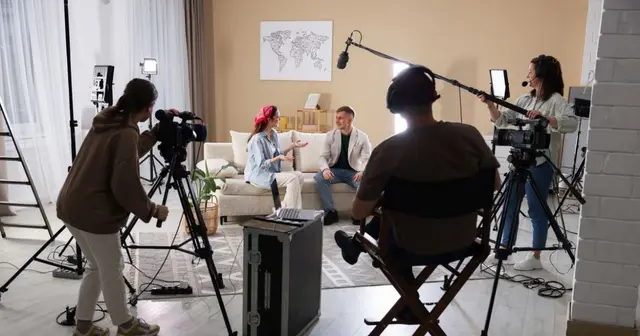
VID's arts and entertainment clients share a specific profile. They are established organizations — performing arts companies, visual arts institutions, entertainment studios, cultural organizations, and arts venues — with genuine creative programming, a defined audience, and a development or revenue ambition that their current content operation is not fully supporting.
You are the right fit if:
- You are a performing arts organization — theater company, dance company, opera, symphony, or chamber ensemble — whose audience development, donor stewardship, and sponsor activation content needs to be more consistent, more professionally produced, and more systematically distributed than your current team can achieve alongside the primary work of producing the art
- You are a visual arts institution — museum, gallery, art fair, or public art program — whose exhibition documentation, artist interview content, educational programming video, and donor communications need to communicate the depth and the significance of the work to audiences who have not yet experienced it in person
- You are an entertainment company — production studio, content company, talent agency, or entertainment technology platform — whose brand content, talent promotion, and audience development video need a systematic production infrastructure rather than a reactive project-by-project approach
- You are an arts venue — performing arts center, amphitheater, festival, or cultural campus — whose event documentation, corporate event marketing, community programming content, and sponsor activation video need to be produced consistently and distributed systematically
- You are an arts organization preparing for a major moment — a capital campaign, a new facility opening, a significant anniversary season, or a major program launch — whose communications content needs to be ready before the moment rather than assembled in its aftermath
- You are an arts or entertainment organization whose sponsorship portfolio is underperforming at renewal because the activation content delivered against each sponsorship is not demonstrating the value the sponsorship fee justified
Case studies
Carnival Corporation
Millions in booked revenue generated through global campaigns.
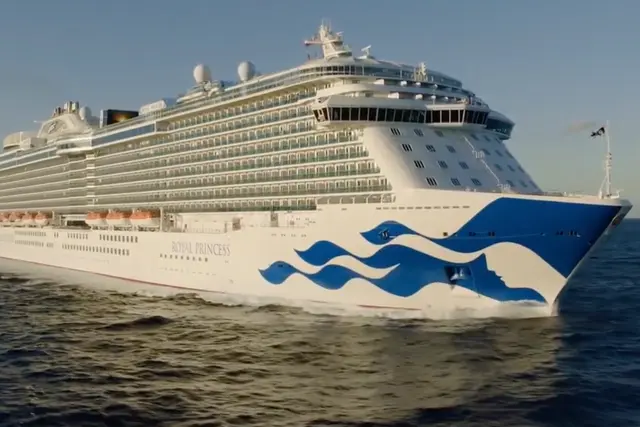
Princess Cruises
Millions in sales. Millions of impressions. Dozens of global shoots. Permanent footage library built and managed.
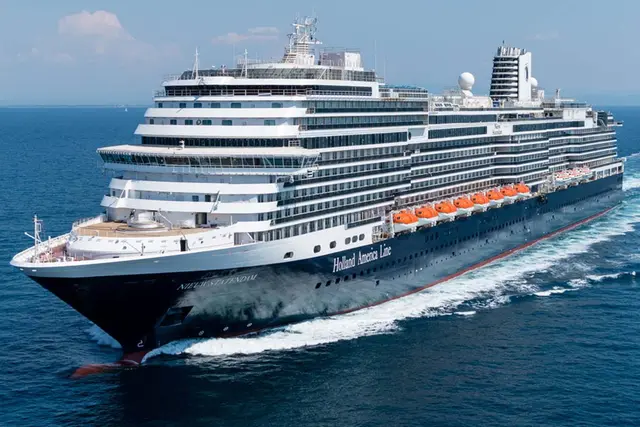
Holland America Line
Millions in booked sales. 244% increase in bookings. Multi-year global campaigns.