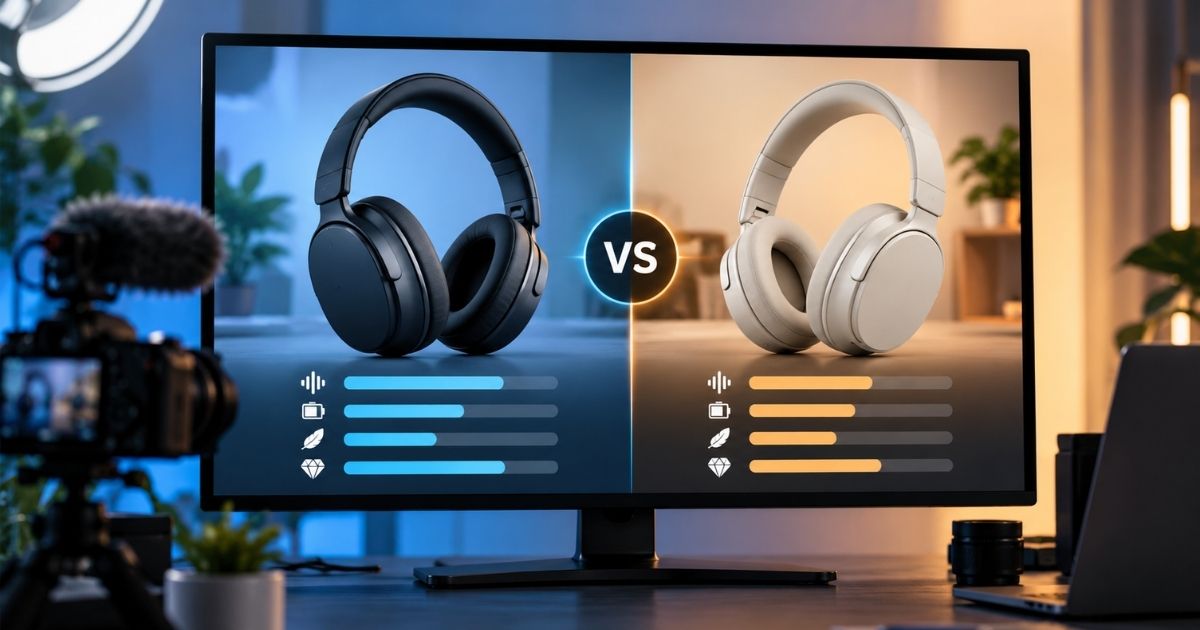
Comparison Video Production helps B2B and DTC brands simplify one of the most important moments in the buying journey: choosing between alternatives. VID creates Comparison Videos that help prospects understand the differences between products, services, approaches, pricing models, workflows, or competing options through clear messaging, product demonstrations, visual comparisons, customer proof, data, screen recordings, spokespeople, and supporting graphics. Comparison Videos can be used across websites, product pages, sales conversations, paid campaigns, YouTube, SEO content, landing pages, retargeting, and late-stage buyer evaluation. The goal is not simply to declare one option better, but to help the buyer understand which solution is the right fit, why the differences matter, and what tradeoffs they should consider before making a decision.
Comparison Video Production for B2B Companies
Create Comparison Videos that help buyers understand differences between products, approaches, and alternatives. VID handles strategy, scripting, production, editing, and delivery.
Comparison Video helps buyers evaluate choices.
That comparison might be:
- Product vs. competitor
- Product vs. product
- Service vs. alternative
- Software vs. manual process
- Outsourcing vs. hiring internally
- Plan vs. plan
- Feature vs. feature
- Old way vs. new way
- Brand vs. category alternative
The strongest Comparison Videos focus on the criteria buyers actually use to make decisions.
Best For
Comparison Video Production is especially useful for:
- B2B SaaS
- Technology companies
- DTC brands
- Ecommerce
- Professional services
- High-consideration products
- Competitive markets
- Product marketing teams
- Sales enablement
- Demand generation
- SEO content
- Paid search and retargeting
- Product pages
- Category creation
- Companies frequently compared against alternatives
Comparison Video Production Process
Buyer Decision Research
Identify:
- What alternatives buyers consider
- Which competitors appear most often
- Which evaluation criteria matter
- What objections arise
- Where your solution is stronger
- Where another option may genuinely be a better fit
Comparison Framework
Define the criteria that will organize the video.
Examples include:
- Features
- Price
- Implementation
- Ease of use
- Speed
- Flexibility
- Support
- Integrations
- Scalability
- Results
- Best-fit customer
Messaging
Explain the differences in a way that is clear, specific, and credible.
Evidence
Support claims with:
- Product demonstrations
- Customer stories
- Data
- Screens
- Pricing information
- Feature comparisons
- Real workflows
- Third-party evidence where appropriate
Production
Use the appropriate combination of:
- Spokesperson
- Executive
- Product expert
- Screen recordings
- Product footage
- Animation
- Motion graphics
- Customer proof
Editing
Make the comparison easy to follow visually through:
- Side-by-side layouts
- Tables
- Feature callouts
- Diagrams
- Data
- Product screens
- Chapters
Versioning
Create versions for:
- Website
- YouTube
- Sales
- Paid campaigns
- Social
- Landing pages
Comparison Video for B2B Sales
Comparison Video can be especially useful late in the B2B buying process.
Sales teams can use it to answer questions such as:
- Why should we choose you?
- Why not hire internally?
- How are you different from Competitor X?
- Why is your approach more expensive?
- Which plan should we choose?
- Why change from our current process?
A well-built comparison asset gives internal champions something they can share with the rest of the buying committee.
Comparison Video for Product Marketing
Product marketing teams can use Comparison Videos to clarify:
- Positioning
- Differentiation
- Competitive advantages
- Ideal use cases
- Feature gaps
- Switching reasons
The content can support launch campaigns, battlecards, sales enablement, and competitor landing pages.
Comparison Video for SEO
Comparison searches often happen when buyers are closer to a purchase decision.
Examples include:
[Product] vs [Competitor][Brand] alternative[Product category] comparisonbest alternative to [Product]in-house vs outsourcedbuild vs buy
Video can strengthen these pages by giving search visitors a faster way to evaluate the decision.
Comparison Video for DTC and E-commerce
Consumer brands can use Comparison Video to help shoppers evaluate physical products.
Useful criteria may include:
- Materials
- Size
- Durability
- Performance
- Design
- Setup
- Ease of use
- Price
- Warranty
- Best use case
The comparison should make the purchase decision easier without relying on unsupported superiority claims.
Comparison Video for SaaS
SaaS Comparison Videos can combine:
- Interface recordings
- Feature matrices
- Workflow demonstrations
- Integration comparisons
- Implementation differences
- Pricing structure
- Customer fit
The strongest SaaS comparisons show the real user experience rather than only presenting a list of features.
Competitor Comparison Video
Direct competitor comparison should be factual and supportable.
Useful areas to compare include:
- Product capabilities
- Pricing model
- Implementation process
- Intended customer
- Service model
- Integrations
- Workflow
- Support
Avoid making claims that cannot be demonstrated or verified.
Alternative Video
Comparison Videos can also be structured around the search intent of:
“What is the best alternative to X?”
Rather than criticizing a competitor, the video can explain:
- Who each solution is best for
- Where they differ
- What tradeoffs exist
- Why certain buyers choose your approach
This can feel more credible than claiming your solution wins in every category.
Build vs. Buy Video
Build vs. Buy content is especially useful for B2B technology and services.
The comparison may cover:
- Development time
- Headcount
- Expertise
- Maintenance
- Speed to value
- Flexibility
- Total cost
- Risk
- Scalability
This helps buyers evaluate the true cost of an internal alternative.
In-House vs. Outsourced Video
Service businesses can compare:
Hiring internally with using an external partner.
Criteria may include:
- Recruiting time
- Salary and benefits
- Management
- Specialist access
- Capacity
- Technology
- Speed
- Scalability
- Cost structure
The right answer may depend on the company, which can make the comparison more credible.
Comparison Video vs. Product Demo Video
A Product Demo Video shows how a product works.
A Comparison Video shows how one option differs from another.
Comparison Videos can include product demonstrations as evidence.
Comparison Video vs. Product Showcase Video
A Product Showcase Video emphasizes the product's strongest features, design, and benefits.
A Comparison Video puts those attributes into context against another option.
Comparison Video vs. Explainer Video
An Explainer Video helps the audience understand a concept, product, or solution.
A Comparison Video specifically helps the audience choose between alternatives.
Comparison Video vs. Sales Enablement Video
Sales Enablement Video is a broader category that can support many parts of the sales process.
Comparison Video is one specific sales enablement format designed around competitive or alternative evaluation.
Fair and Credible Comparison
Comparison content is stronger when it acknowledges tradeoffs.
A credible comparison may say:
Option A is better for this type of buyer.
Option B is better when these priorities matter.
Then explain why your solution is the better fit for the specific audience you serve.
That approach can build more trust than pretending every buyer should choose the same solution.
Comparison Criteria
Useful comparison categories may include:
- Price
- Features
- Service
- Speed
- Implementation
- Ease of use
- Customization
- Scalability
- Support
- Integrations
- Quality
- Automation
- Control
- Time required
- Team requirements
- Total cost of ownership
- Best-fit customer
Choose only the criteria buyers actually care about.
Comparison Video Across the Buyer Journey
Awareness
Compare the old way with the new way.
Consideration
Compare categories or approaches.
Evaluation
Compare specific products, competitors, or plans.
Decision
Address final tradeoffs, cost, implementation, and customer fit.
The closer the buyer is to purchase, the more specific the comparison can become.
Comparison Video for Account-Based Marketing
Comparison Videos can support strategic accounts when the company knows which alternatives the buyer is evaluating.
A targeted version can address:
- Current solution
- Industry-specific needs
- Workflow
- Technical requirements
- Implementation
- Business outcome
This gives the account a more relevant evaluation tool.
Comparison Video Repurposing
One Comparison Video production can create:
- Main Comparison Video
- Competitor Alternative Video
- Sales Clips
- Product Clips
- Feature Comparisons
- Paid Ads
- LinkedIn Videos
- YouTube Content
- Landing Page Video
- Retargeting Creative
- Short-Form Videos
- FAQ Content
- Sales Enablement Assets
Measuring Comparison Video Performance
Useful metrics may include:
- Watch time
- Completion rate
- Comparison-page engagement
- CTA clicks
- Demo requests
- Trial starts
- Sales usage
- Opportunities influenced
- Competitive win rate
- Proposal conversion
- Paid campaign performance
- Pipeline influenced
- Revenue influenced
For sales-focused Comparison Videos, usage by sales teams and competitive win rates can be especially useful signals.
When & Where You Can Use This Format
Use Comparison Video Production when prospects are actively deciding between your solution and another option.
It is especially useful when:
- Prospects frequently ask how you compare to a competitor — Turn repeated sales answers into a reusable buyer-education asset.
- Your product is meaningfully different — Show the differences instead of relying on broad positioning claims.
- You compete against doing nothing — Compare the cost and outcome of maintaining the status quo with taking action.
- You compete against internal hiring — Show the differences between building the capability in-house and using your solution.
- You have multiple plans or products — Help customers understand which option is best for their situation.
- Your category is crowded — Give buyers a clear framework for evaluating alternatives.
- You want to support high-intent SEO — Create content around comparison searches buyers make during evaluation.
- Your sales cycle stalls during vendor evaluation — Give buying committees a simple way to understand tradeoffs.
- You are launching a differentiated product — Compare the new approach with the conventional way of solving the problem.
- You need retargeting content for warm prospects — Address the exact decision buyers are already considering.

"We won a Telly Award! I'm seriously beyond grateful as their work truly represented the passion Teachable and I have for the creators that are saying yes to their passions, big ideas and sharing it with the world."

"We have worked with VID on multiple projects and have been very impressed with their process! They are very thorough in pre-production communications and calls to ensure the shoot day goes off without a hitch, and post-production processing happens in a timely manner. They've been very responsive & accurate with edits when we've needed them, although their editing team has great attention to detail as well, so our edits have not been many. Definitely recommend!"
"We have been partnered with multiple media companies over the years and so far VID has outdone them all! We’ve used them on over 20 projects so far and already have more in the works. Their pre-production process ensures a smooth shoot day, and they are consistently on time with the deliverables post-production. Anytime we have feedback or changes from the shoot, they are quick to offer a resolution or make edits. They’re also great for getting shot list ideas once they know the business and really helping craft the creative vision. Lots of talented people on this team, and a great value!!"
“We had been just creating videos with my phone and knew with our recently updated branding that we needed to showcase that in our marketing videos as well. So we hired VID to produce incredible student testimonials that we can add to our sales pages, advertisements, social media, etc...They are so versatile!”
Examples Of This Format
- Product vs. Competitor Video — Compare two products across the criteria buyers care about most.
- Software vs. Manual Process Video — Show the difference between using software and continuing with spreadsheets or manual workflows.
- Agency vs. In-House Team Video — Compare outsourcing with hiring and managing an internal team.
- Platform A vs. Platform B Video — Help buyers understand which platform fits different use cases.
- Plan Comparison Video — Explain the differences between pricing tiers or packages.
- Feature Comparison Video — Compare how different solutions handle one specific capability.
- Old Way vs. New Way Video — Show why a newer process, technology, or category exists.
- Product Version Comparison — Compare different models, editions, sizes, or configurations.
- DTC Product Comparison — Show how one consumer product differs from another based on design, materials, performance, or use.
- Service Model Comparison — Compare retainer, project, subscription, managed service, or consulting approaches.
- Build vs. Buy Video — Help buyers decide between developing a solution internally and purchasing an existing product.
- DIY vs. Managed Service Video — Compare self-service execution with a fully managed solution.
- Competitor Alternative Video — Position the product as an alternative for buyers actively researching a named competitor.
- Category Comparison Video — Compare two broader ways of solving the same problem.
- Before-and-After Process Comparison — Show how a workflow changes after adopting the solution.
Commonly Asked Questions
What Is a Comparison Video?
A Comparison Video helps viewers evaluate the differences between two or more products, services, approaches, plans, or alternatives.
It is designed to make a buying decision easier.
What Can a Comparison Video Compare?
Comparison Videos can cover:
- Product vs. competitor
- Product vs. product
- In-house vs. outsourced
- Build vs. buy
- Software vs. manual process
- Plan vs. plan
- Feature vs. feature
- Old approach vs. new approach
Are Comparison Videos Good for B2B Marketing?
Yes.
B2B buyers frequently evaluate multiple vendors, internal alternatives, and approaches before making a decision.
Comparison Videos can help clarify those differences for the entire buying committee.
Can Comparison Videos Mention Competitors by Name?
Yes, when appropriate, but competitor claims should be factual, accurate, and supportable.
The company should review relevant claims and legal considerations before publishing direct competitor comparisons.
Should a Comparison Video Say Our Product Is Better?
Only where the claim is meaningful and supportable.
A stronger approach is usually to explain:
- Where the products differ
- Which customers each option is best for
- What tradeoffs exist
- Why your solution is stronger for a specific use case
How Long Should a Comparison Video Be?
Length depends on the complexity of the decision.
Examples might include:
- Quick comparison — 1–2 minutes
- Product comparison — 2–5 minutes
- Detailed B2B evaluation — 5–10+ minutes
The video should cover the important decision criteria without becoming unnecessarily long.
Can Comparison Videos Include Product Demos?
Yes.
Showing each workflow or feature can make the comparison much more useful than simply talking about the differences.
Can Comparison Videos Include Pricing?
Yes, when public pricing is available and relevant.
If pricing changes frequently or requires customization, the video can compare pricing models or cost structures instead of specific figures.
Can Comparison Videos Be Used on Competitor Landing Pages?
Yes.
A competitor comparison or alternative page can combine written SEO content with a video explanation.
Can Comparison Videos Be Used by Sales Teams?
Yes.
Sales teams can use them in:
- Follow-up emails
- Digital sales rooms
- Proposals
- Competitive deals
- Stakeholder education
- Objection handling
Can Comparison Video Support SEO?
Yes.
Comparison and alternative searches can represent high buyer intent.
Video can complement pages targeting search terms around:
- Vs.
- Alternatives
- Comparisons
- Build vs. buy
- In-house vs. outsourced
Can Comparison Video Work for DTC Products?
Yes.
Consumer Comparison Videos can demonstrate differences in:
- Product quality
- Features
- Performance
- Materials
- Size
- Ease of use
- Price
- Best use cases
Can We Compare Multiple Products in One Video?
Yes.
A comparison can include two or several alternatives if the structure remains easy to follow.
Can One Comparison Production Create Multiple Videos?
Yes.
One production may create:
- Full Comparison Video
- Individual Feature Comparisons
- Competitor-Specific Videos
- Social Clips
- Sales Videos
- Paid Ads
- FAQ Videos
Can Comparison Video Be Part of VID Operate?
Yes.
Comparison Video works well through VID Operate when competitive messaging, product updates, sales enablement, and high-intent buyer education need to evolve continuously.
A defined Comparison Video or competitor campaign can be scoped through VID Project.
What Makes a Strong Comparison Video?
A strong Comparison Video helps the buyer make a decision instead of simply attacking an alternative.
It should clearly communicate:
- What is being compared
- Which criteria matter
- Where the differences are
- What tradeoffs exist
- Who each option is best for
- Why the viewer might choose your approach
The objective is clarity.
When the comparison is fair, specific, and useful, the buyer can reach the conclusion with greater confidence.
VID for
Comparison Video
Help buyers compare options clearly and understand where your product, service, or approach is the better fit.