Why Educational Videos Matter
When the same information has to be explained repeatedly, the business becomes dependent on people.
Educational Video Production helps turn that knowledge into an asset.
A well-designed video library can help:
- Reduce repetitive explanations
- Improve customer onboarding
- Standardize training
- Support self-service learning
- Reduce support volume
- Improve product adoption
- Preserve institutional knowledge
- Increase consistency across teams
The result is a more scalable way to teach.
Built for Customers, Teams, and Partners
Educational Videos can be used across multiple parts of the business.
Customer Education
Help customers understand how to use your product, follow a process, adopt new features, or get more value from what they purchased.
Employee Training
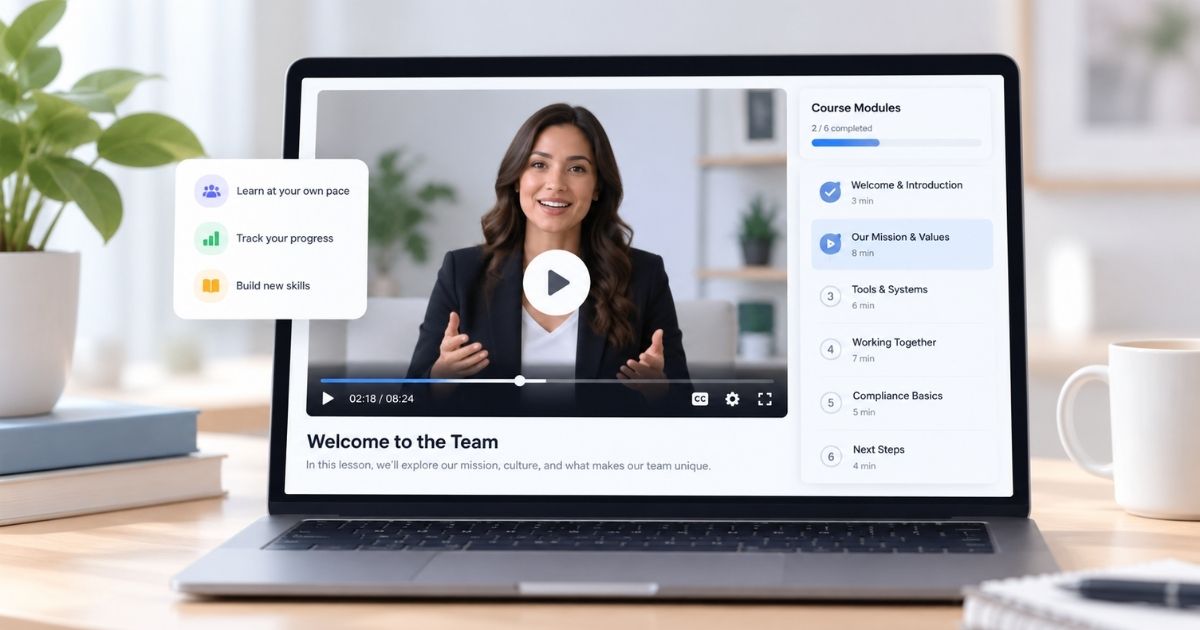
Create repeatable training for onboarding, processes, systems, compliance, operations, and role-specific knowledge.
Partner Enablement
Give partners, resellers, or distributed teams a consistent way to learn your offer, positioning, processes, and expectations.
Thought Leadership & Expertise
Turn internal knowledge into educational content that builds trust and authority with your market.
From Individual Videos to a Learning Library
Educational Video Production can range from one focused explainer to a complete library of structured learning content.
Common formats include:
- Onboarding Videos
- Training Videos
- How-To Videos
- Tutorials
- Product Education
- Process Walkthroughs
- Course Content
- Knowledge Base Videos
- Internal SOP Videos
- Customer Success Videos
- Partner Training
- Expert-Led Educational Series
The format is matched to what the audience needs to understand, remember, and do next.
More Than Marketing Content
Educational Videos can support marketing, but their value often extends far beyond awareness.
They can become part of the operating infrastructure of the business.
Instead of answering the same question repeatedly, your team can send the video.
Instead of training every new hire from scratch, your team can use a structured library.
Instead of depending on live support for basic education, customers can learn on demand.
The Outcome
The goal of Educational Video Production is not simply to make information easier to watch.
It is to make knowledge easier to scale.
A strong Educational Video library helps your business teach more people, more consistently, with less repeated effort.
What Is an Educational Video?
An Educational Video is designed to teach a specific concept, process, skill, or system in a clear and repeatable way.
It helps viewers understand information, apply what they learned, and move forward without requiring live instruction every time.
How Is an Educational Video Different From a Tutorial Video?
Tutorial Videos are usually shorter and focused on completing one specific task.
Educational Videos can be broader.
They may be part of a complete learning system that includes:
- Customer onboarding
- Product education
- Internal training
- SOPs
- Certification
- Courses
- Multi-step learning paths
A tutorial might explain how to complete one action. An Educational Video system helps someone understand a larger process or body of knowledge.
Where Are Educational Videos Used?
Educational Videos can support both customers and internal teams.
Common use cases include:
- Customer onboarding
- Help centers
- Knowledge bases
- Internal training
- SOP libraries
- Online courses
- Product education
- Certification programs
- Partner enablement
- Reseller training
They are especially useful anywhere the same information needs to be explained repeatedly.
Can Educational Videos Reduce Support Tickets?
Yes.
One of the strongest benefits of Educational Video Production is giving customers clear, self-serve answers before they need to contact support.
Videos can explain common questions, workflows, setup processes, and troubleshooting steps in a format users can revisit whenever needed.
This can reduce repetitive support requests while improving the customer experience.
Does VID Help Structure the Educational Content?
Yes.
VID can help organize existing knowledge into a clear video-based learning system rather than simply producing disconnected standalone videos.
Depending on the project, that can include:
- Curriculum structure
- Topic organization
- Learning sequences
- Script development
- Lesson planning
- Content prioritization
- Video format recommendations
- Production and editing
The objective is to make the knowledge easier to understand, navigate, and apply.
Can Educational Videos Become a Course or Paid Product?
Yes.
Educational Video Production can be used to build:
- Online courses
- Paid training programs
- Certification programs
- Customer academies
- Premium content libraries
- Membership education
- Partner training programs
When the knowledge has standalone value, the video library itself can become a product or revenue stream.
How Long Should Educational Videos Be?
There is no single ideal length.
Many Educational Videos fall between 2 and 10 minutes, but the right duration depends on the complexity of the topic and the learning objective.
Simple concepts may only require a few minutes.
More complex lessons can be broken into multiple shorter videos so viewers can learn one concept at a time.
The goal is to make each video long enough to teach the topic clearly without adding unnecessary information.
Can VID Produce Educational Videos Remotely or On-Site?
Yes.
Educational Videos can be produced through:
- Remote recording
- Studio production
- On-site filming
- Screen recording
- Presenter-led production
- Hybrid production
The production approach depends on the subject matter, instructor, audience, and desired production quality.
Can Educational Videos Include Screen Recordings and Demonstrations?
Yes.
Screen capture can be especially useful for:
- Software training
- Product education
- Process walkthroughs
- Internal systems
- Tutorials
- Help center content
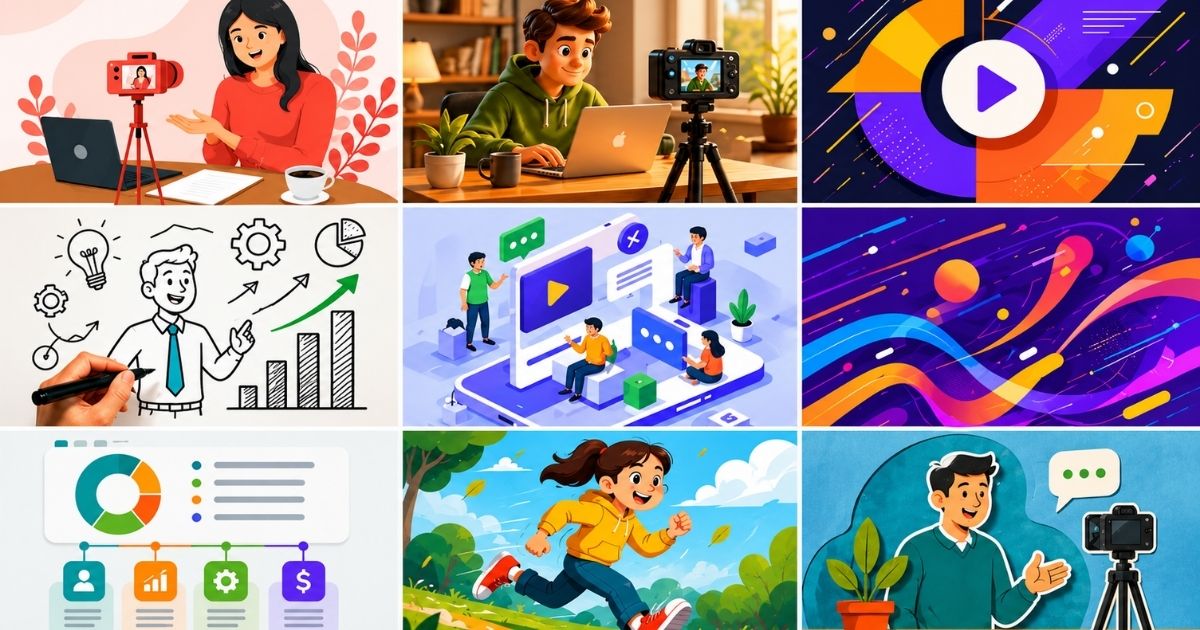
VID can combine screen recordings with narration, presenters, motion graphics, captions, and supporting visuals to make technical information easier to follow.
What Makes VID’s Approach to Educational Video Production Different?
Many companies create training content one video at a time as questions arise.
VID approaches Educational Video Production as a system.
That means identifying what people need to learn, organizing the information into a logical structure, producing the right video formats, and creating a library that can continue delivering value over time.
The objective is not simply to create training videos.
It is to turn knowledge into scalable infrastructure.