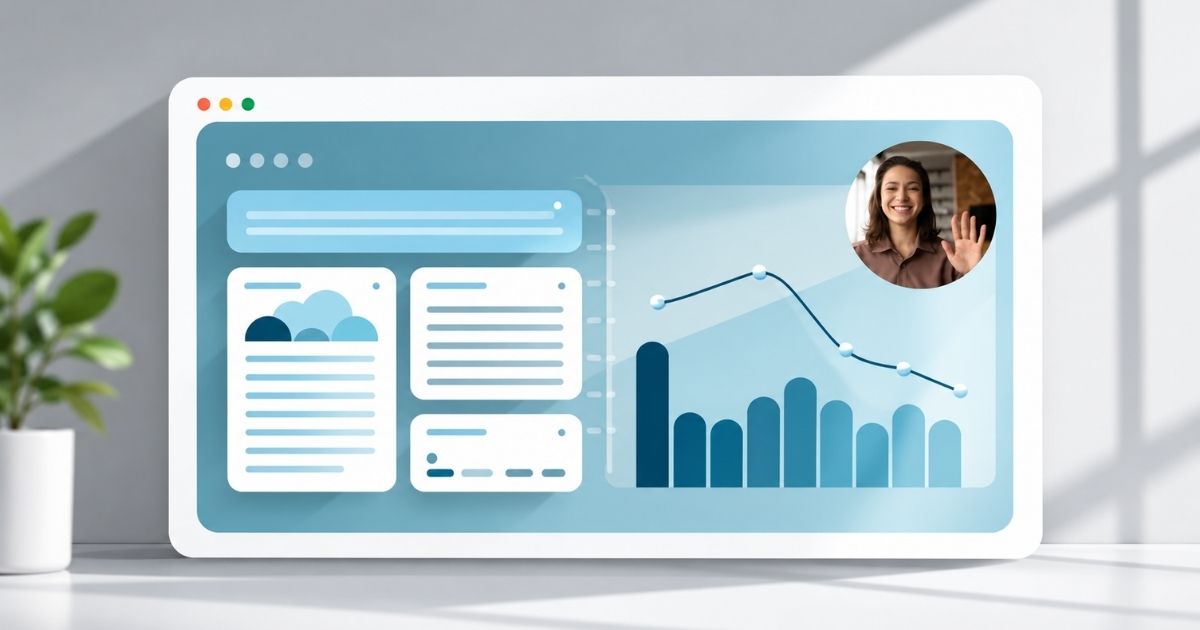
Learning and Development Video Production helps B2B organizations turn employee knowledge, training, onboarding, compliance, and skills development into a scalable video-based learning system. VID produces L&D videos that reduce dependence on repeated live training by giving employees clear, consistent content they can access on demand. Programs can include new-hire onboarding, role-specific training, compliance modules, leadership development, software training, process education, certification content, and professional development. Depending on the subject, VID can combine presenter-led instruction, screen recordings, demonstrations, motion graphics, interviews, captions, quizzes, and supporting learning assets. The goal is to help companies train more people, more consistently, without requiring the training team to grow at the same rate.

Learning and Development Video Production for B2B Companies
VID produces learning and development video for B2B organisations — onboarding, training, compliance, and skills development content that scales without scaling the training team.
Learning and Development Video Production helps organizations turn employee knowledge, training, and professional development into a scalable learning system.
VID produces L&D video content designed around specific learning objectives, employee roles, and business outcomes. Programs can support onboarding, compliance, systems training, leadership development, sales enablement, certification, and ongoing skills development without requiring every lesson to be delivered live.
The strongest L&D video programs are modular, searchable, easy to update, and connected to the systems employees already use.
Best For
Learning and Development Video Production is especially useful for:
- Enterprise organizations
- B2B SaaS companies
- Healthcare organizations
- Financial services
- Technology companies
- Professional services firms
- Manufacturing companies
- Distributed workforces
- Multi-location organizations
- Fast-growing companies
- HR and People teams
- Learning and Development teams
- Sales enablement teams
- Customer success organizations
Build Learning Around Outcomes
A strong L&D program should begin with what the employee needs to know or be able to do after completing the training.
Useful learning outcomes might include:
- Complete a specific workflow correctly
- Understand a company policy
- Operate a system or tool
- Demonstrate product knowledge
- Follow a safety procedure
- Apply a sales methodology
- Manage employees effectively
- Meet certification requirements
That outcome should determine the structure, format, length, and assessment of the video content.
Learning and Development Video Production Process
Learning Needs Assessment
Identify the knowledge gaps, training priorities, employee groups, and desired outcomes.
Curriculum Architecture
Organize the material into courses, modules, lessons, and role-specific learning paths.
SME Knowledge Capture
Work with internal subject-matter experts to extract the knowledge that needs to be taught.
Instructional Development
Turn that expertise into scripts, lesson plans, demonstrations, examples, and visual teaching aids.
Production
Capture presenter-led instruction, screen recordings, demonstrations, interviews, animation, or on-site material.
Post-Production
Add editing, captions, graphics, diagrams, callouts, chapters, and other elements that improve comprehension.
Deployment
Prepare content for the LMS, employee portal, intranet, knowledge base, or other internal learning environment.
Maintenance
Update individual lessons as policies, systems, products, and processes change.
Modular Learning Libraries
Long training sessions are often harder to navigate and maintain.
A modular L&D library breaks a larger subject into focused lessons that employees can complete independently.
For example, a new-hire program might include:
- Welcome to the Company
- Mission and Values
- How the Business Works
- Products and Services
- Internal Systems
- Role Expectations
- Core Processes
- Compliance
- First 30 Days
This structure makes the content easier to assign, search, measure, and update.
Learning Paths by Role
Different employees need different knowledge.
L&D Video can be organized into learning paths for:
- New employees
- Managers
- Sales
- Customer Success
- Marketing
- Operations
- Finance
- Product
- Engineering
- Partners
- Executives
Role-based learning reduces irrelevant training and makes the experience more useful to the employee.
Learning and Development Video vs. Educational Video
An Educational Video is designed broadly to teach a concept, process, or skill.
Learning and Development Video is specifically tied to organizational learning and employee development.
L&D programs typically include structured curricula, learning objectives, employee groups, assessments, certifications, and ongoing development.
Learning and Development Video vs. Internal Communications Video
An Internal Communications Video is designed primarily to inform employees.
A Learning and Development Video is designed to teach them.
Internal communication might announce a new policy.
L&D content would explain how to apply that policy correctly.
Learning and Development Video vs. SOP Video
An SOP Video documents one repeatable process.
An L&D program may include many SOP Videos as part of a broader learning path that also includes context, skills, policies, assessments, and development.
Microlearning Video
Not every lesson needs to be a full training module.
Microlearning uses short, focused videos to teach one idea or behavior at a time.
Examples include:
- One software feature
- One sales technique
- One compliance reminder
- One manager skill
- One process step
- One customer-service principle
These videos can be particularly useful for ongoing reinforcement after the initial training is complete.
Knowledge Capture and Institutional Memory
Some of the most valuable knowledge inside an organization exists only in the heads of experienced employees.
L&D Video Production can capture that knowledge before it is lost through:
- SME interviews
- Process walkthroughs
- Demonstrations
- Expert lessons
- Leadership training
- Role-specific guidance
This creates a reusable institutional knowledge library that is not dependent on one person being available.
Certification and Assessment
Video learning can support structured certification programs.
A certification path may include:
- Required lessons
- Demonstrations
- Knowledge checks
- Assessments
- Practical exercises
- Completion requirements
VID can structure the video content that supports these programs while the LMS or learning platform manages testing and completion tracking.
Accessibility
Learning content should be accessible to as much of the workforce as possible.
Depending on the program, L&D videos can include:
- Closed captions
- Transcripts
- Clear on-screen text
- High-contrast graphics
- Alternate language versions
- Audio description where appropriate
Accessibility also improves usability for employees watching in different environments.
Localization for Global Workforces
A master training program can be adapted for global teams through:
- Subtitles
- Voiceover
- Dubbing
- Translated graphics
- Localized examples
- Region-specific compliance content
- Alternate product interfaces
This allows organizations to maintain consistent training standards while adapting the content for different markets.
Reinforcement After Training
The learning experience should not always end when the course does.
Short follow-up videos can reinforce important knowledge over time.
Examples include:
- Monthly skill refreshers
- Product update videos
- Manager tips
- Compliance reminders
- Best-practice clips
- New feature training
This turns learning from a one-time event into an ongoing system.
Measuring L&D Business Impact
Learning metrics should connect back to organizational performance whenever possible.
Useful measures may include:
- Training completion
- Assessment scores
- Certification rates
- Time-to-productivity
- Time-to-competency
- Employee performance
- Error reduction
- Compliance completion
- Support requests
- Manager satisfaction
- Employee confidence
- Employee retention
- Training hours saved
The goal is not simply for employees to watch the videos.
It is for the learning to improve how work gets done.
Repurposing Opportunities
One L&D production can create:
- Full Training Modules
- Microlearning Clips
- SOP Videos
- Onboarding Lessons
- Manager Training
- Help Center Content
- Certification Lessons
- Screen Tutorials
- Refresher Videos
- Internal Knowledge Base Content
- Transcripts
- Training Presentation Assets
Professional Learning and Development Video Production helps organizations scale employee onboarding, training, compliance, skills development, and knowledge transfer through reusable video content.
VID produces Learning and Development Videos, Employee Training Videos, Corporate Training Videos, Onboarding Videos, Compliance Training Videos, Leadership Training Videos, Sales Training Videos, SOP Videos, Certification Content, and LMS Video Content for B2B organizations.
Production can include curriculum development, instructional design support, scripting, subject-matter expert interviews, screen recording, studio production, remote filming, on-site production, animation, professional editing, captions, localization, and LMS-ready delivery.
Learning and Development Video can support employee onboarding, professional development, compliance, leadership training, internal academies, certification programs, distributed workforces, and broader corporate training initiatives.
For a defined training program or content library, production can be scoped through VID Project. Organizations with ongoing learning needs can build recurring L&D content through VID Operate.
When & Where You Can Use This Format
Use Learning and Development Video Production when your organization needs a more scalable, consistent way to train employees and develop skills across teams.
It is especially useful when:
- You’re onboarding employees at scale — Standardize company, role, systems, and process training for every new hire.
- Your training team repeats the same sessions — Move foundational instruction into reusable video so trainers can focus on coaching and higher-value development.
- You need consistent compliance training — Deliver required policies, safety, regulatory, or process training in a repeatable format.
- Employees need role-specific skills development — Build structured learning paths around sales, leadership, operations, software, customer success, or technical skills.
- Your workforce is distributed — Give employees in different offices, regions, and time zones access to the same training.
- Processes or systems are changing — Create training around new tools, workflows, policies, or operating procedures.
- You’re building an LMS or internal academy — Populate your learning platform with structured video lessons and modules.
- You need to preserve institutional knowledge — Capture expertise from subject-matter experts before critical knowledge is lost or siloed.
- You want to reduce time-to-productivity — Help employees reach competency faster with clear, on-demand learning content.
.png)
$270,000+ Launch — “This video is f@$% PERFECT! Love how it is tight and clear call to action. Helped me skyrocket my book launch.”
"Over 60,000 views and 350 engagements with my brand story video — people loved it!"

"The 'Real answer to how many sets you need' is a breakout winner. $119 CPA and 5.3x ROAS over two weeks, so we’re scaling it another 25%. Dr. J would you be able to film 3-4 variations of this? (same content and structure but new hook. ideally new camera angles or locations)."
"This video F'ing ROCKS! So pleased! It's time the masses saw this awesomeness!!!"
Examples Of This Format
- New Employee Onboarding Program — Introduce company culture, systems, policies, teams, and expectations through a structured video curriculum.
- Role-Based Training Series — Build separate learning paths for sales, customer success, operations, marketing, finance, or other functions.
- Compliance Training Video — Deliver required instruction around safety, security, privacy, workplace policies, or regulatory requirements.
- Leadership Development Series — Train managers and emerging leaders on communication, coaching, performance management, and decision-making.
- Sales Training Program — Teach messaging, product knowledge, discovery, objection handling, process, and CRM workflows.
- Software and Systems Training — Show employees how to use internal platforms, tools, software, and operating systems.
- SOP Training Library — Turn repeatable processes into clear video-based standard operating procedures.
- Manager Onboarding Program — Help new managers understand expectations, systems, policies, and leadership responsibilities.
- Product Knowledge Training — Educate employees on products, features, use cases, positioning, and customer outcomes.
- Certification Program — Build a structured video curriculum tied to testing, competency, or formal certification.
- Professional Skills Development — Create training around communication, presentation, project management, customer service, or other core skills.
- Subject-Matter Expert Knowledge Series — Capture internal expertise and turn it into reusable learning content for the broader organization.






Commonly Asked Questions
What Is Learning and Development Video Production?
Learning and Development Video Production is the creation of video content specifically designed to train employees, build skills, transfer knowledge, and support organizational learning.
It can be used for:
- Onboarding
- Compliance
- Role training
- Leadership development
- Systems training
- Professional development
- Certification
- Continuing education
The goal is to create learning content that can be delivered consistently and repeatedly across the organization.
How Is Learning and Development Video Different From a Training Video?
A Training Video is typically one individual instructional asset.
Learning and Development Video is broader.
It can include an entire learning system made up of multiple videos, modules, assessments, learning paths, and development programs.
A Training Video may teach one process.
An L&D program can support an employee’s development across an entire role or career stage.
Can L&D Videos Reduce the Need for Live Training?
Yes.
Video works especially well for foundational information that needs to be delivered consistently.
Organizations can move repeatable instruction into video and reserve live training for:
- Coaching
- Discussion
- Practice
- Feedback
- Role-playing
- Complex questions
This allows training teams to support more employees without repeating the same presentation every time.
Can VID Help Structure the Curriculum?
Yes.
VID can help organize knowledge into a logical learning system.
Depending on the engagement, that can include:
- Learning objectives
- Curriculum structure
- Module planning
- Lesson sequencing
- Script development
- SME interviews
- Video format recommendations
- Production
- Editing
- Captions
- Supporting assets
The objective is to build a learning experience, not just a collection of videos.
Can Learning and Development Videos Be Used in an LMS?
Yes.
VID can prepare content for Learning Management Systems and internal training platforms.
Videos can be organized into:
- Courses
- Modules
- Lessons
- Certification tracks
- Role-based learning paths
Delivery specifications can be matched to the platform your organization already uses.
Can VID Create Compliance Training Videos?
Yes.
Compliance training can cover topics such as:
- Workplace policies
- Safety
- Privacy
- Security
- Regulatory requirements
- Ethics
- Harassment prevention
- Industry-specific standards
Content should be developed with the appropriate internal legal, HR, compliance, or subject-matter stakeholders.
Can L&D Videos Include Screen Recordings and Demonstrations?
Yes.
Screen recording and demonstrations are especially useful for:
- Software training
- Systems onboarding
- Internal workflows
- Technical processes
- Tools
- SOPs
VID can combine them with presenters, voiceover, motion graphics, callouts, and captions.
How Long Should Learning and Development Videos Be?
The ideal length depends on the learning objective.
Shorter modular lessons are often easier for employees to navigate and revisit.
Typical formats might include:
- Quick Process Video — 2 to 5 minutes
- Training Lesson — 5 to 15 minutes
- Development Module — 10 to 20 minutes
- Longer Programs — Broken into multiple lessons
The goal is to teach one clear objective at a time whenever possible.
Can L&D Videos Be Localized for Global Teams?
Yes.
Learning content can be adapted through:
- Subtitles
- Captions
- Translated graphics
- Voiceover
- Dubbing
- Region-specific versions
This can help global teams maintain more consistent training across languages and locations.
Can Learning and Development Videos Be Updated Over Time?
Yes.
L&D libraries should be designed to evolve.
Modular production makes it easier to update one lesson when:
- Policies change
- Software changes
- Processes change
- Roles evolve
- Compliance requirements are updated
This is more efficient than rebuilding an entire training program every time something changes.
How Do You Measure Learning and Development Video Performance?
Useful metrics may include:
- Course completion
- Video completion
- Knowledge assessment scores
- Certification completion
- Time-to-productivity
- Employee proficiency
- Training participation
- Support questions
- Manager feedback
- Retention of key information
The right metrics depend on the learning outcome the program is designed to improve.
Can Learning and Development Video Be Part of VID Operate?
Yes.
Organizations with ongoing training needs can incorporate Learning and Development Video Production into a recurring Video System through VID Operate.
For a defined onboarding program, training library, or curriculum build, the engagement can be scoped through VID Project.
VID for
Learning and Development Video
Transfer knowledge, build capability, and document institutional processes in a repeatable, scalable video format that reduces training overhead and maintains consistency regardless of who delivers the instruction.