VID Global Navigation
Skip to content
The Video Department
Video Distribution & Repurposing

Turn every video into more content, across more channels.

VID helps B2B companies turn finished videos and source recordings into a repeatable distribution system — repurposing, packaging, publishing, and measuring content across Owned, Paid, Earned, and Borrowed Media Channels.

One recording. More assets. More channels. More opportunities to be seen.

Video Distribution

What happens after the edit?

A finished video isn't the finish line. Someone still has to decide what gets published, where it goes, how it should change for each platform, what the title or thumbnail should say, when everything goes live, whether paid distribution should support it, and how performance should influence what gets created next. Without a distribution system, even great videos end up sitting in folders, getting published once, or disappearing into a feed.

VID turns finished videos into a repeatable content distribution system.
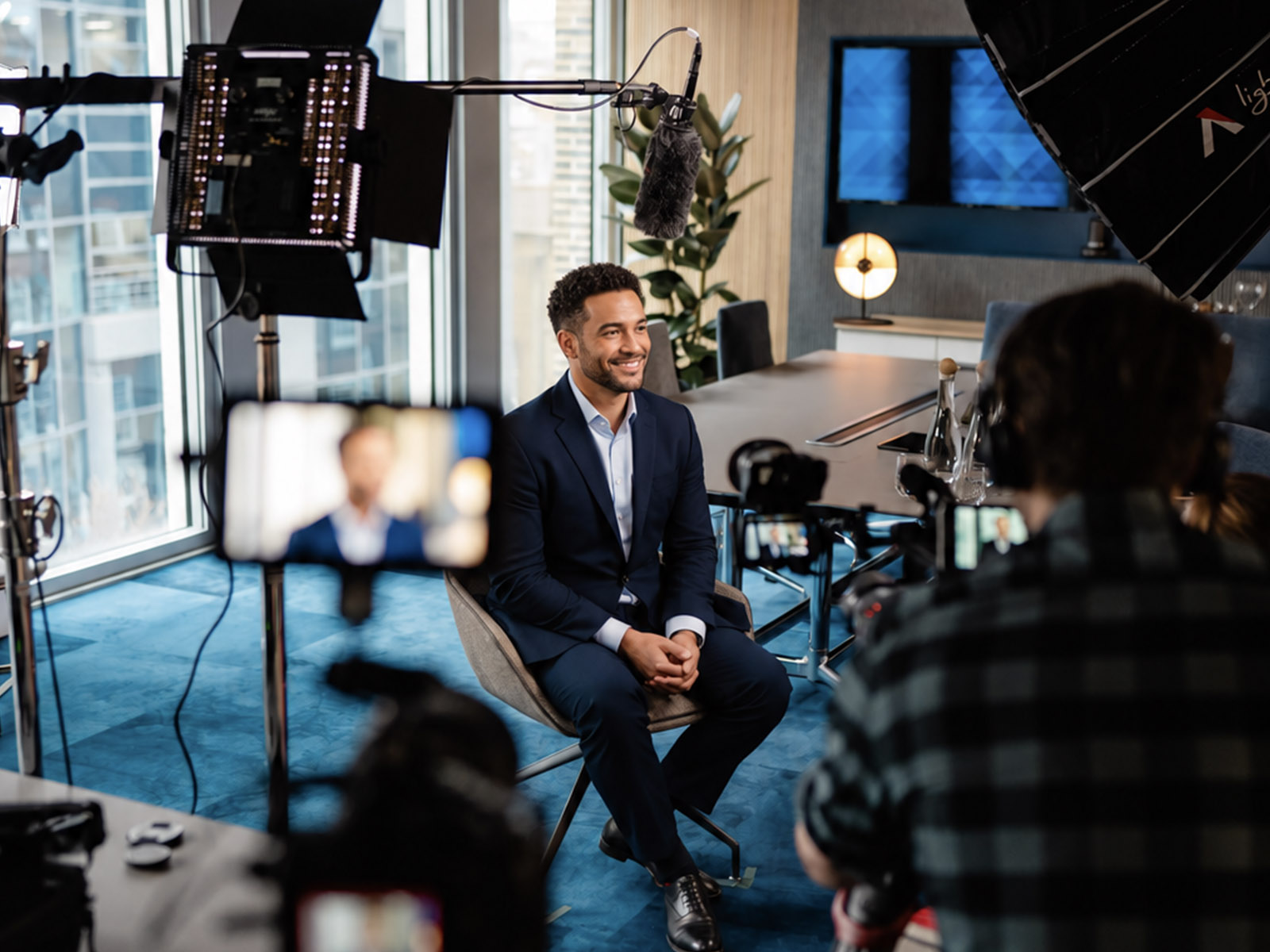
VID production crew on set On set
Traditional Production
Strategy→ Shoot→ Edit→ Final Export→ Stop
The VID System
Strategy→ Create→ Edit→ Repurpose→ Distribute→ Measure→ Improve
↻ Repeats, and compounds with every cycle
One Recording → A Content System

Get more from every time you hit record.

One recording shouldn't create one video. VID can turn a single source recording into an entire family of content designed for different audiences, platforms, and stages of the buyer journey.

Source1 Recording
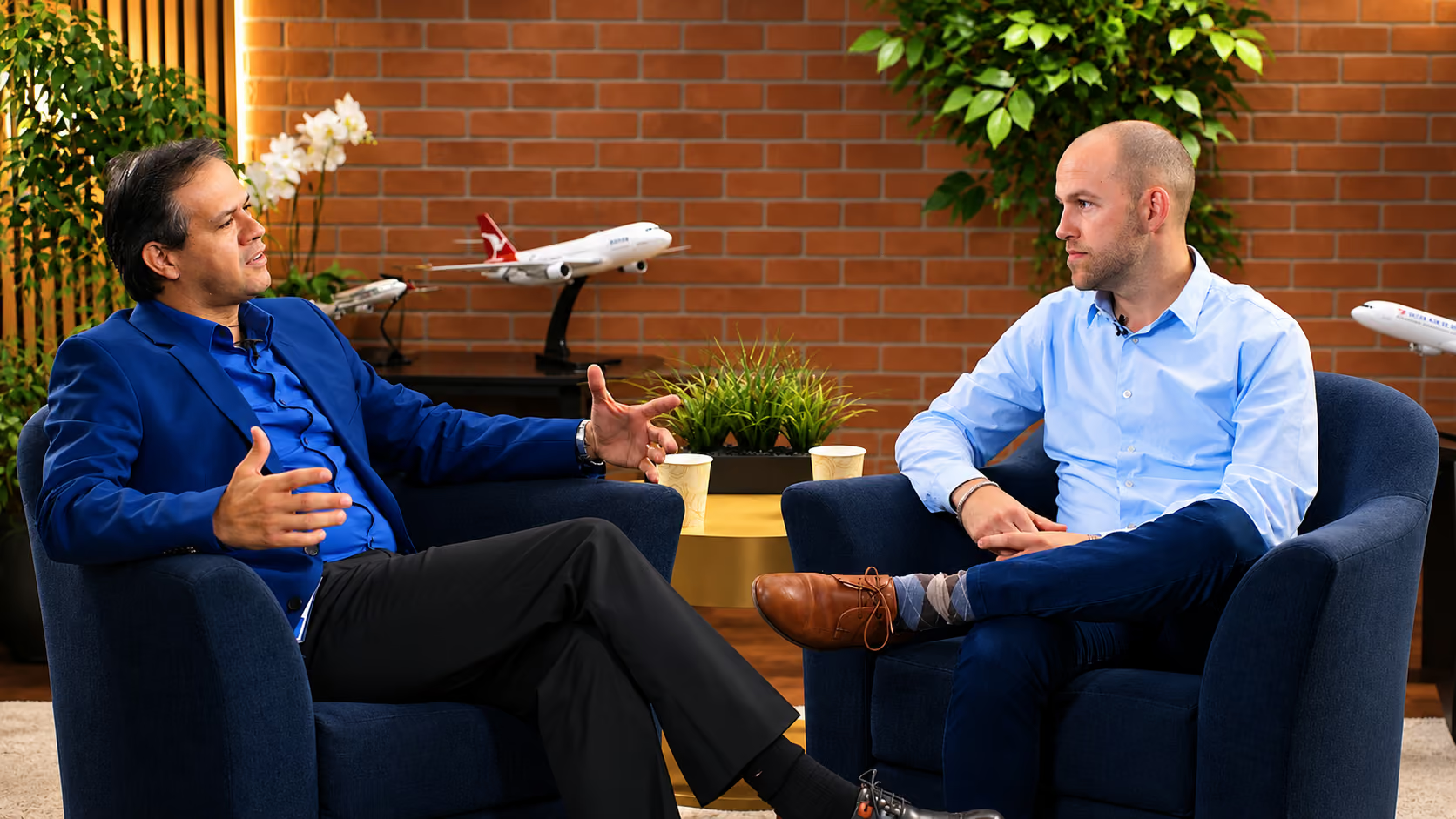
PodcastInterviewWebinar Customer ConversationFounder RecordingProduct Walkthrough
Behind-the-scenes of a VID video production shoot
Core AssetThe primary story
Long-form videoEpisodeCustomer storyEducational video
RepurposeThe family of assets
Long-form videoShort-form clipsVertical videosYouTube Shorts LinkedIn videosSocial cutdownsTopic excerptsCustomer quotes Sales clipsWebsite assetsAlternate hooks
PackageReady for each channel
TitlesThumbnailsDescriptionsCaptions HooksCTAsMetadataChannel formatting
DistributeAcross four channels
OwnedPaidEarnedBorrowed
MeasureWhat actually happened
ViewsReachWatch timeRetention EngagementClicksSubscribersLeadsConversions
ImproveFeeds the next recording

Performance feeds back into the next recording — what to make, how to shoot it, and what it's for.

Record once. Build an entire content system around it.

Distribution Framework

Owned. Paid. Earned. Borrowed.

Effective B2B video distribution isn't about uploading the same video everywhere. It's about understanding how your company can reach an audience, and adapting your video content to each distribution channel.

01 — Owned Media

Build the video channels your company owns.

Owned media is the foundation — the channels, properties, audiences, and content assets your company controls directly.

The goal: build a video library that compounds.

WebsiteVideo LibraryLanding Pages EmailNewsletterResource Center Sales EnablementCustomer Communications
VID video production for a company's owned channels
02 — Paid Media

Put distribution behind the videos that matter most.

Paid distribution puts video in front of specific audiences through advertising, sponsorships, boosted content, retargeting, and other paid placements.

Create once. Adapt the creative for where it's being distributed.
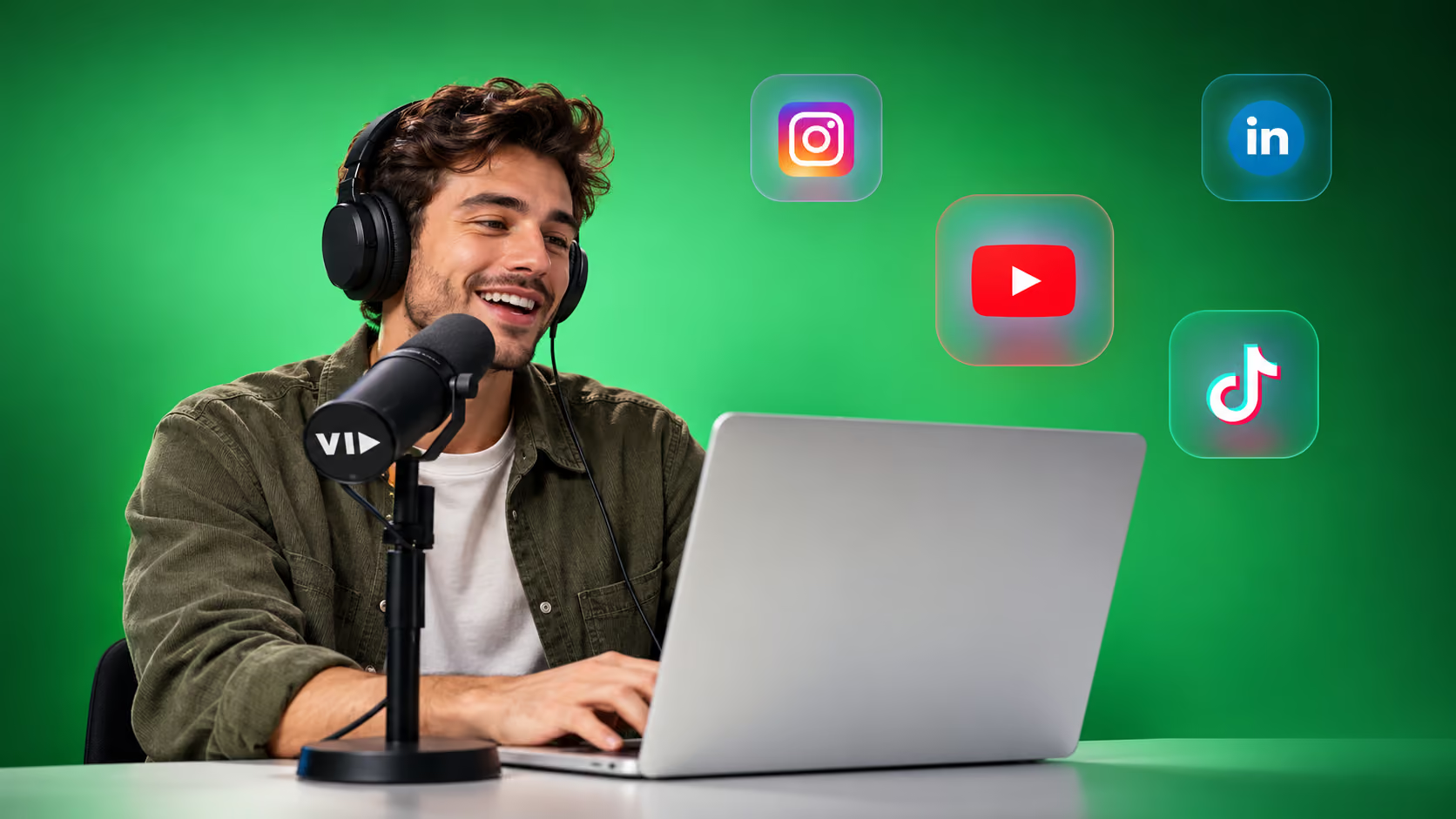
LinkedIn AdsYouTube AdsMeta Ads CTVRetargetingPaid SocialSponsored Placements
Paid social distribution creative

VID creates and adapts video creative for paid channels, and collaborates with internal performance teams or specialized media-buying partners when required.

03 — Earned Media

Create videos people want to share.

Earned distribution happens when other people voluntarily extend the reach of your content.

Make something worth passing along.

Customer SharesEmployee SharesOrganic Mentions Press CoverageBacklinksCommunity Discussion Partner AmplificationWord of Mouth
Video content designed to be shared by others
04 — Borrowed Media

Reach audiences other people have already built.

Borrowed media allows your content to travel through audiences, communities, personalities, and platforms that already have attention.

Create content with and through people who already have audience trust.
Executive LinkedIn ProfilesEmployee NetworksCreators Industry ExpertsPodcastsPartner Channels CommunitiesGuest AppearancesCo-MarketingEvents
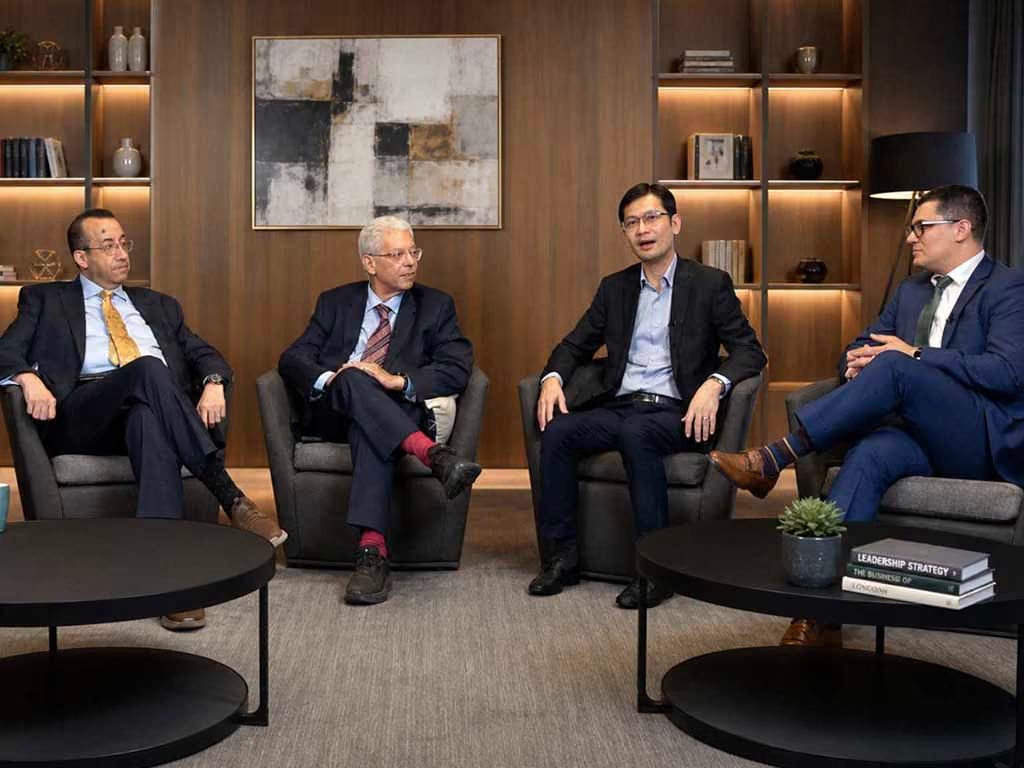
Content distributed through a webinar and event partner audience
The Distribution System

One video. Four ways to reach the market.

Your company records a 30-minute customer conversation. Here's what happens next.

30-Minute Customer Conversation

Owned

  • Full customer story on website
  • Long-form interview in video library
  • Clips embedded on product pages
  • Newsletter distribution
  • Sales enablement clips

Paid

  • LinkedIn ads
  • Retargeting creative
  • Paid social cutdowns
  • Creative variations

Earned

  • Customer shares the story
  • Employees amplify clips
  • Industry publications reference it
  • Organic audience sharing

Borrowed

  • Customer publishes to their network
  • Executives distribute through LinkedIn
  • Partners share relevant moments
  • Contributors expose content to their audiences

One recording can become dozens of distribution opportunities.

That's the difference between producing a video and operating a video system.

Video Repurposing

One idea shouldn't live in one format.

Your audience consumes content differently depending on where they encounter it. VID identifies the strongest ideas inside your source content and turns them into standalone assets designed around where and how they'll be distributed.

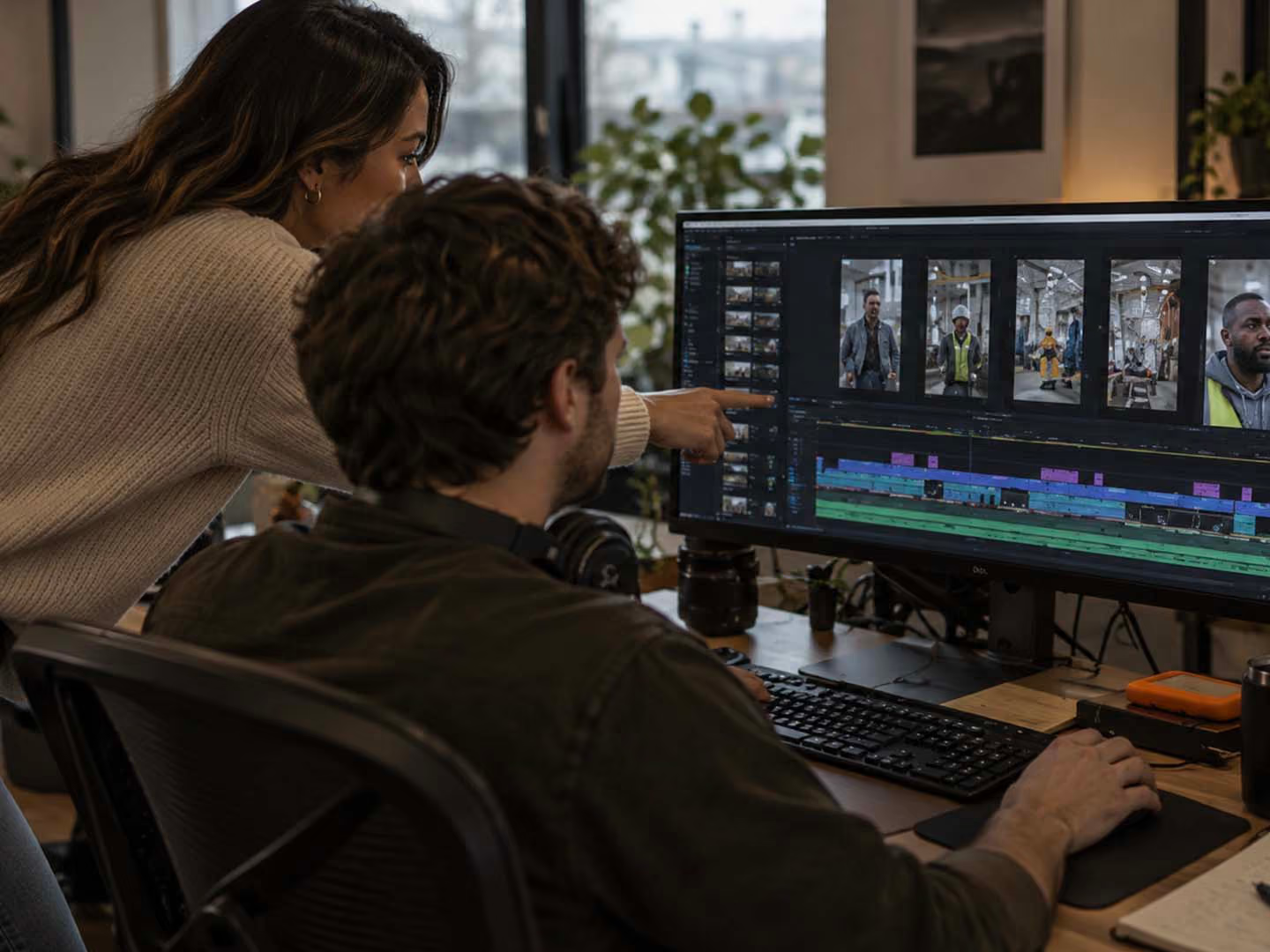
Producer reviewing a recording for repurposing Reviewing the cut for repurposing
30 min YouTube Interview
5 min Topic Segment
90 sec LinkedIn Video
30 sec YouTube Short / Reel
15 sec Paid Creative Hook
Quote Website / Sales Asset

Not random clips. Content with a job to do.

Channel Strategy

The right video. In the right place. For the right audience.

Publishing everywhere isn't a video distribution strategy. VID helps determine which channels matter, what belongs on each one, and how video should change based on where people encounter it.

One video adapted into several languages and formats One video, several languages

YouTube

Long-form video, Shorts, thumbnails, titles, descriptions, playlists, publishing, and optimization.

LinkedIn

Executive thought leadership, native video, customer proof, educational clips, and employee distribution.

Short-Form Social

Vertical video adapted for Shorts, Reels, TikTok, and feed-based consumption.

Website

Customer stories, product videos, explainers, proof, landing-page video, and evergreen content.

Sales

Video organized for prospecting, follow-up, demonstrations, objection handling, and active opportunities.

Email

Video integrated into newsletters, nurture sequences, launches, and campaigns.

Paid Campaigns

Creative adapted into multiple hooks, lengths, formats, and messages.

Partners & Creators

Content designed for customers, executives, employees, creators, and partners to distribute.

Publishing

We don't just hand you a folder.

The difference between having videos and operating a video channel is what happens after approval. VID helps manage the workflow from final edit to published content.

MondayYouTube Episode
TuesdayLinkedIn Clip
WednesdayEmail
ThursdayShort
FridayExecutive Post
Content CalendarChannel PreparationTitles & Descriptions ThumbnailsCaptions & CopyScheduling & PublishingContent Library

Your team approves. Your Video Department keeps the system moving.

Ownership

Your content. Your channels. Your audience.

VID operates your video system on behalf of your company — not instead of it. Your company maintains ownership of its final approved video assets.

Video 001
Video 002
Customer Story 003
Podcast 004
Short 005
Product Video 006
Video 007
Video 008
Video 009
Video 010
Video 011
Video 012

Every video becomes another customer story, another searchable resource, another sales tool, another piece of intellectual property, another opportunity to be discovered.

The objective isn't dependence on VID. It's building video infrastructure your company owns.

Consistency

Consistency turns content into a system.

The exact cadence depends on your strategy, channels, audience, and production volume — this is one representative month.

Week 01
  • Publish primary long-form video
  • Email distribution
  • Executive shares primary insight
Week 02
  • Short-form clip
  • LinkedIn video
  • Sales asset
Week 03
  • Second short-form asset
  • Redistribute key insight
  • Launch / refresh paid creative
Week 04
  • Third cutdown
  • Partner / employee distribution
  • Performance review

Measure → Learn → Record Again

Reporting & Optimization

Know what your videos are actually doing.

Distribution creates data. Data makes the next video better.

EXAMPLE DASHBOARD — ILLUSTRATIVE DATA LAST 30 DAYS
Reach
142Kviews
Attention
61%avg. retention
Engagement
3.4Kreactions
Growth
+880subscribers
Action
214leads
Reach: views, impressions, unique viewers, audience growth. Attention: watch time, retention, completion, drop-off. Engagement: comments, shares, saves, reactions. Growth: subscribers, followers, returning viewers. Action: clicks, inquiries, leads, conversions where measurable. Creative Performance and Distribution Performance are reviewed alongside these to see which hooks, topics, formats, and channels earn attention.
Course creator reviewing performance from their operating view Producer's view

Reporting determines what your Video Department should make next.

The Video Flywheel

Distribution makes production smarter.

Traditional production: Brief → Produce → Edit → Deliver. The VID system runs as a loop instead.

  • What people watch informs what you create.
  • Retention informs how you edit.
  • Clicks inform how you package.
  • Engagement informs which topics deserve expansion.
  • Sales conversations reveal new questions to answer.
  • Customer stories create new proof.

Every publishing cycle makes the next production cycle smarter.

Your Video Department

Distribution shouldn't require five different vendors.

That fragmentation is exactly what the Video Department model is designed to solve. With VID Operate, strategy, production, repurposing, distribution support, publishing, and performance optimization operate as one connected system.

Production Company + Freelance Editor + Social Agency
Media Buyer + Internal Marketer + Someone Uploading to YouTube
↓
VIDYOUR VIDEO DEPARTMENT

One Strategy.

One Workflow.

One Content Calendar.

One Accountable Video Department.

The VID Operate offer, consolidated into one system
Built for B2B Video

Make every recording work harder.

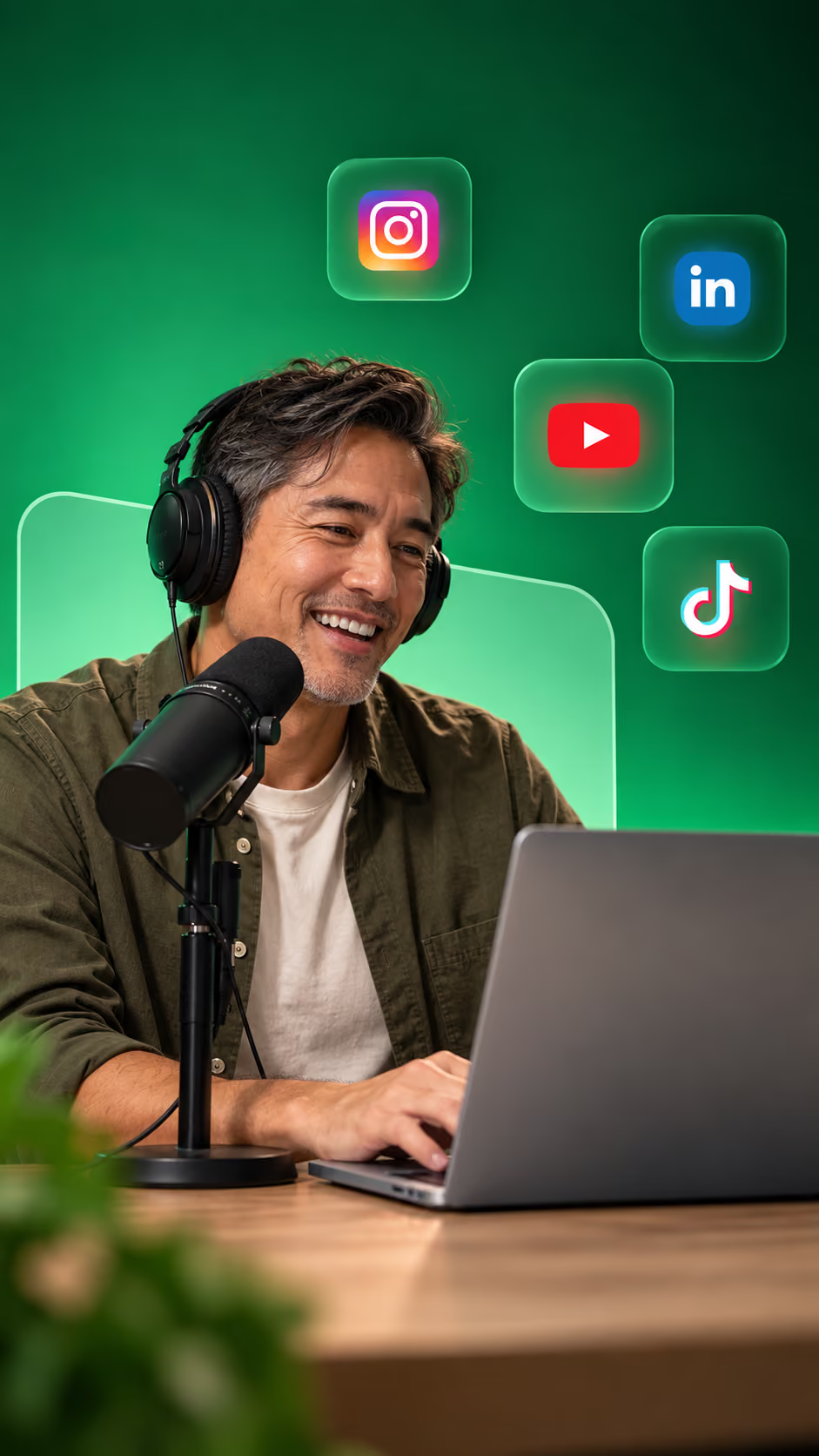
Video podcast production for a B2B company

Video Podcasts

Turn conversations into long-form episodes, Shorts, LinkedIn clips, executive content, and an expanding searchable library.

Executive thought leadership video production

Thought Leadership

Turn internal expertise into consistent content across executive, company, and industry channels.

Webinar and live event video production

Webinars & Events

Extend one-time recordings into educational clips, highlights, sales content, social assets, and evergreen resources.

Customer story video production

Customer Stories

Distribute customer proof across websites, sales conversations, social channels, paid campaigns, and partner networks.

Product demonstration video production

Product Content

Turn demonstrations and educational recordings into searchable videos, social clips, sales assets, and customer education.

Campaign video production

Campaigns

Build multiple channel-specific assets around a central campaign idea.

How It Works

From recording to reporting.

01

Strategize

Define audience, message, channels, formats, and objectives.

02

Create

Record original content with VID or provide existing footage.

03

Edit

Build the primary video around its objective and destination.

04

Repurpose

Identify additional stories, hooks, proof points, and formats.

05

Package

Prepare titles, thumbnails, captions, descriptions, metadata, and channel-specific assets.

06

Distribute

Activate the appropriate mix of Owned, Paid, Earned, and Borrowed Media Channels.

07

Measure

Understand what earns attention, engagement, action, and audience growth.

08

Improve

Use performance insights to make the next production cycle smarter.

Then repeat.

Video Distribution FAQs

Frequently asked questions

What is video distribution?+
Video distribution is the process of getting video content in front of its intended audience through relevant channels. A B2B video distribution strategy can include company-owned properties, social platforms, paid advertising, partners, creators, employees, customers, email, sales channels, and other forms of distribution.
What is video repurposing?+
Video repurposing turns an existing recording or finished video into additional assets for different channels, audiences, formats, or use cases. One long-form interview, for example, could become YouTube videos, LinkedIn clips, vertical Shorts, customer proof, website content, sales enablement assets, and paid creative.
What are Owned, Paid, Earned, and Borrowed Media Channels?+
Owned media includes channels and assets your company controls, such as your website, email list, and content library. Paid media is distribution your company pays for, such as advertising, sponsorships, or promoted content. Earned media is exposure generated voluntarily by others, including shares, mentions, coverage, referrals, and organic amplification. Borrowed media uses audiences and platforms your company doesn't directly own, including social networks, creators, partners, communities, executives, and other established audiences.
What's the difference between video production and video distribution?+
Video production creates the asset. Video distribution determines how that asset reaches its intended audience. A complete video system connects both so distribution isn't something the marketing team has to figure out after production ends.
Which video distribution channels should a B2B company use?+
The right channels depend on the company's audience, goals, sales process, content format, and existing audience. Common B2B channels include YouTube, LinkedIn, company websites, email, sales outreach, paid advertising, executives, employees, customers, partners, creators, and industry communities. The objective isn't to publish everywhere — it's to identify the channels where your audience already spends time and build a consistent distribution system around them.
Can VID repurpose videos you didn't produce?+
Yes. Depending on the source material and engagement, VID can work with existing webinars, podcasts, interviews, presentations, events, customer recordings, and other video footage.
Does VID publish videos for us?+
Publishing support can be incorporated into an ongoing VID engagement. Responsibilities, channels, approvals, access, and publishing cadence are defined as part of your Video Department system.
Does VID manage paid media?+
VID's primary role is the video system and creative: strategy, production, repurposing, packaging, distribution support, publishing, and optimization. VID can create and adapt video assets for paid campaigns and collaborate with your internal performance team or specialized media-buying partner when needed.
Do we own our videos?+
Yes. Your company's final approved video assets become part of your company's content library.
How many pieces of content can one recording create?+
It depends on the recording, subject matter, length, quality, and distribution strategy. VID focuses on finding useful standalone ideas rather than manufacturing an arbitrary number of clips.
Is video distribution included with VID Operate?+
VID Operate is designed as an ongoing Video Department rather than isolated video production. Strategy, production cadence, repurposing needs, distribution channels, publishing responsibilities, and reporting are established as part of the engagement.
Build Your Video Department

Don't let another finished video die in a folder.

The edit isn't the end. It's the beginning of distribution. VID helps B2B marketing teams strategize, create, repurpose, distribute, publish, measure, and improve video consistently across Owned, Paid, Earned, and Borrowed Media Channels.

Your marketing team's Video Department.