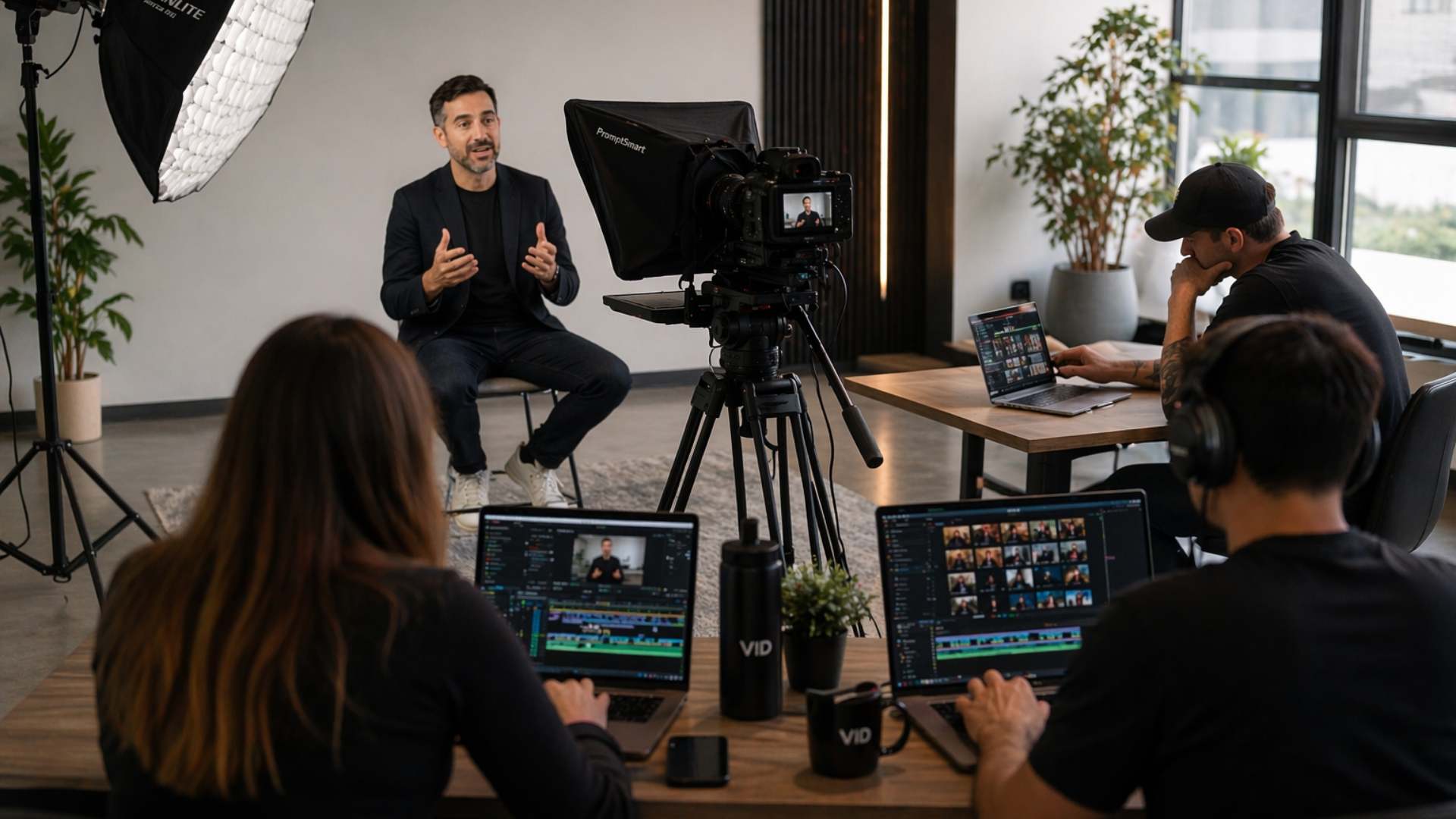
A Video Operating System is the documented infrastructure layer that sits underneath a marketing team's video production — the strategy, the workflow, the tech stack, the performance tracking, and the trained team that make consistent output possible without depending on any single person or vendor to hold it together.
The operating system analogy is deliberate and specific. A smartphone's operating system does not make calls, send messages, or play music. It gives every app the foundation it needs to perform those functions reliably, predictably, and without the user needing to understand how the underlying infrastructure works. A Video Operating System does the same thing for video production. It does not produce videos directly — it gives the team the documented foundation, the structured workflow, and the configured infrastructure they need to produce videos consistently, predictably, and without starting from scratch every time a new piece of content is needed.
Most B2B marketing teams do not have a Video Operating System. They have a video production practice — a loose collection of informal processes, individual preferences, and vendor relationships that produce output when the conditions are right and stall when they are not. The difference between a practice and a system is documentation, delegation, and durability. A practice lives in people. A system lives in documentation and survives every personnel change.
The components of a complete Video Operating System include the Messaging Framework that tells the team what to say and who to say it to, the Format Stack that tells the team what formats to produce and why, the production workflow that tells the team how to move from brief to published without coordination overhead, the CRM attribution that tells the team what the production is producing for the pipeline, and the trained team that executes all of the above without requiring a senior manager to direct every production decision.
VID installs a complete Video Operating System — branded VidOS™ — inside marketing teams in 30 days through the VidOS™ Install engagement. Every component is documented, trained, and handed over with a guarantee that the system runs independently by Day 45.