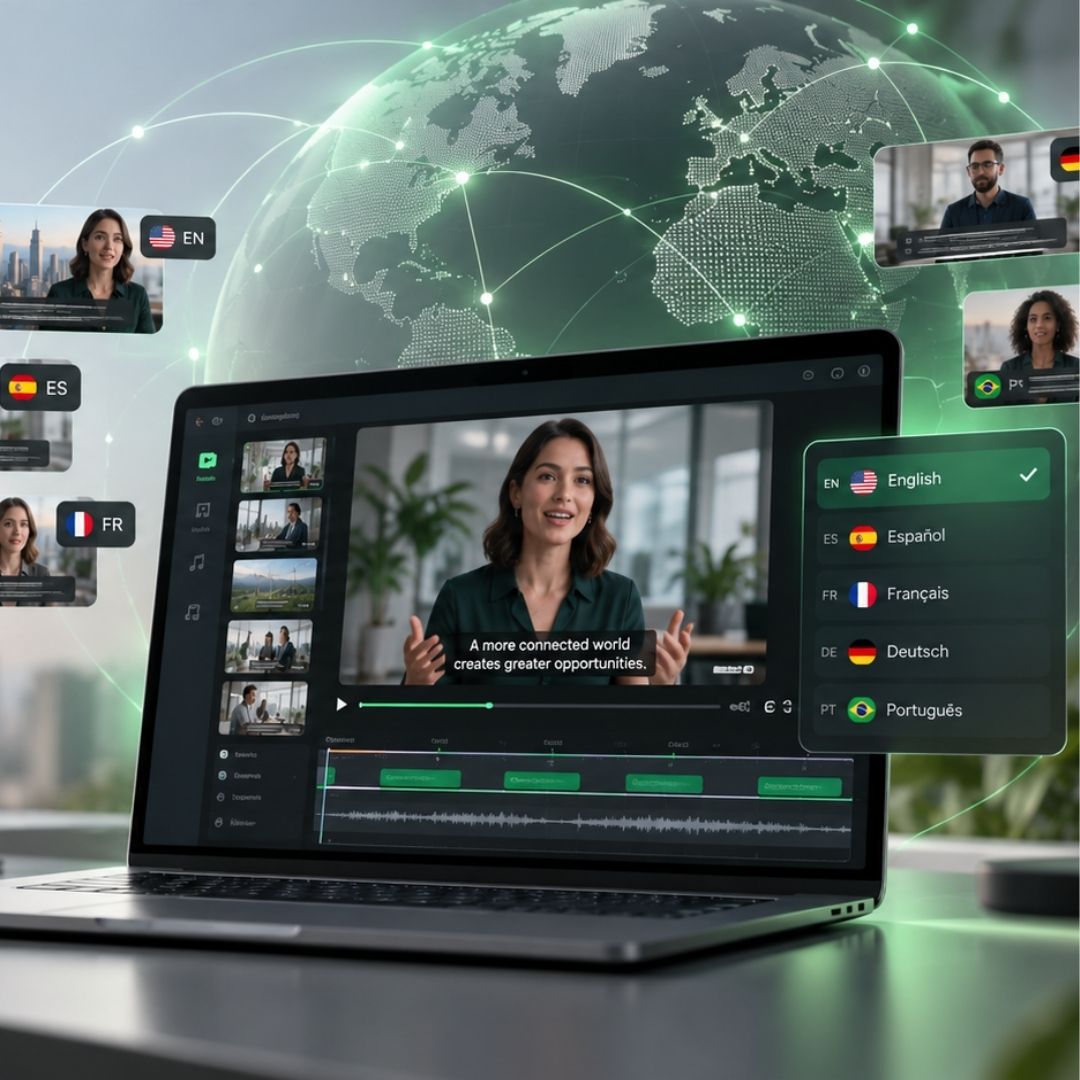
Localization & Additional Language expands existing VID-produced or client-supplied video into additional languages, markets, and regional versions.
VID can manage the localization workflow from source script through final translated video deliverables.
Depending on the project, that may include translation, subtitle creation, voiceover, dubbing, translated graphics, regional CTAs, alternate end cards, localized product terminology, and platform-specific exports.
The objective is to preserve the message, quality, and intent of the original video while making the finished asset feel appropriate for the new audience.
Localization can be applied to individual assets through VID Project or incorporated into a recurring VID Operate system for companies consistently producing content across multiple markets.
Producing the original video is only the beginning when your buyers operate across multiple languages and markets.
A strong product explainer, customer story, executive video, training asset, or campaign may work well in English but lose effectiveness when international teams are forced to distribute the same version everywhere.
Simple translation is rarely enough.
On-screen graphics may still be in the original language. Captions may feel literal or unnatural. Voiceover timing may not match the edit. Calls to action may not fit the regional market. Product terminology may vary. A phrase that works in one country may sound awkward or unclear in another.
Localization & Additional Language solves that problem by adapting the complete video experience for the intended audience rather than simply translating the script.
Localization & Additional Language is best for companies that already have video working in one market and want to extend that content into additional languages, regions, or international audiences without rebuilding the entire production from scratch.
It is especially useful for global B2B companies, SaaS platforms, technology brands, healthcare organizations, education companies, financial services firms, and multi-region marketing teams that need the same core message to work across multiple markets.
This service is a strong fit when your company is expanding internationally, supporting regional sales teams, launching localized campaigns, serving multilingual customers, or creating video for audiences that should not have to rely on English-only content.
What is video localization?
Video localization is the process of adapting a video for a specific language, region, or audience.
It can include translation, subtitles, dubbing, voiceover, graphics, CTAs, terminology, and other regional changes.
What is the difference between translation and localization?
Translation changes the language.
Localization adapts the broader experience.
That may include phrasing, timing, visuals, terminology, calls to action, currency, product references, and other market-specific details.
Can VID add subtitles in other languages?
Yes.
VID can create translated subtitle and caption versions for additional languages.
Can VID dub existing videos?
Yes.
Dubbing can be included depending on the asset, source footage, language, and desired production quality.
Can VID provide multilingual voiceover?
Yes.
Localized voiceover can be produced for explainers, demos, training videos, corporate content, and other formats.
Can you translate on-screen graphics?
Yes.
Text-based graphics, lower thirds, titles, CTAs, and other visual elements can be translated and recreated for the localized version.
Can one video be localized into multiple languages?
Yes.
One source video can be adapted into multiple language versions.
Each language is typically managed as its own deliverable so quality control, timing, graphics, and review can be handled appropriately.
Can VID localize videos we did not originally produce?
Yes, when usable source materials are available.
The amount of localization possible depends on access to source video files, editable graphics, scripts, audio stems, and other production assets.
What files should we provide?
Useful source materials may include the final master, project files, clean audio, music stems, scripts, graphic files, fonts, caption files, and brand guidelines.
VID can confirm the required materials during scoping.
Do we need to re-film the spokesperson?
Usually not.
Many videos can be localized through subtitles, dubbing, or voiceover.
Re-filming may be recommended when the market requires a native-language presenter or when the localized version needs to feel fully native rather than adapted.
Can VID use native-language speakers?
Yes.
Native-language translators, reviewers, voice talent, actors, or presenters can be incorporated when required by the project.
Can regional teams review the translations?
Yes.
Client-side regional or language reviewers can be incorporated into the approval workflow.
This is often valuable when the company uses specialized terminology or market-specific messaging.
Can you localize technical B2B content?
Yes.
Technical terminology should be treated carefully, particularly in industries such as SaaS, healthcare, finance, engineering, and education.
VID can work from client-approved terminology and subject-matter feedback to help preserve accuracy.
Can you localize paid advertising creative?
Yes.
Video ads can be adapted into language- and region-specific versions, including translated hooks, CTAs, graphics, voiceover, captions, and end cards.
Can you localize LinkedIn and social content?
Yes.
Short-form video can be adapted for different languages and markets while maintaining platform-specific formatting.
Can the CTA be different in each country?
Yes.
Regional CTAs, landing pages, phone numbers, URLs, offers, and other market-specific details can be incorporated into separate versions.
Does localization include publishing?
Publishing or distribution support can be included when part of the broader VID Operate scope.
For standalone projects, VID can deliver finished localized assets for your team to distribute.
How long does localization take?
Timing depends on the length and complexity of the source video, number of languages, type of localization, review process, and whether dubbing or translated graphics are required.
The delivery schedule is defined during scoping.
How is localization priced?
Pricing typically depends on:
- Number of source videos
- Video duration
- Number of languages
- Translation complexity
- Subtitle requirements
- Voiceover or dubbing
- Graphics replacement
- Number of regional versions
- Review requirements
VID provides a defined scope before production begins.
Is this available as an ongoing service?
Yes.
Companies producing recurring multilingual content can incorporate Localization & Additional Language directly into VID Operate.
Is this just for international companies?
No.
A U.S.-based company may still serve multilingual audiences and need Spanish or other language versions for domestic marketing, sales, training, or customer education.
Translation & Message Adaptation
Effective video localization should preserve meaning rather than translate every word literally.
VID can adapt scripts around the language, terminology, and context of the intended audience while maintaining the strategic intent of the original video.
This is especially important for B2B content where product names, industry terminology, technical concepts, and sales language need to remain precise.
When the client has approved terminology, glossaries, regional messaging, or legal language, those materials can be incorporated into the localization workflow.
Subtitles & Captions
Subtitles are often the fastest way to extend an existing video into another language.
VID can create translated subtitles and caption files for localized distribution while adjusting line breaks, timing, reading speed, and formatting for the new language.
Subtitles can be delivered as embedded captions or separate caption files depending on the channel and publishing requirements.
Multilingual Voiceover
For audiences that should experience the video fully in their own language, VID can replace the original narration or dialogue with localized voiceover.
The process may include voice selection, script adaptation, recording, timing adjustments, audio mixing, and final integration into the original edit.
Voiceover can work especially well for:
- Product explainers
- Training videos
- Corporate videos
- Product demonstrations
- Sales enablement
- Educational content
- Animated videos
Dubbing
When on-camera dialogue needs to remain visually present, dubbing can provide a more immersive localized experience than subtitles alone.
VID can coordinate translated dialogue, voice performance, timing, and post-production so the localized audio follows the pacing and intent of the original speaker.
The appropriate approach depends on the format, audience expectations, and production quality required.
Translated Graphics
Many videos contain important information beyond spoken dialogue.
That may include:
- Headlines
- Product labels
- Data points
- Lower thirds
- Calls to action
- Animated text
- Screenshots
- End cards
- Captions
VID can recreate or update these visual elements so the complete video is localized rather than leaving key information in the original language.
Regional Versioning
Some markets require more than a language change.
A localized version may need a different:
- CTA
- Landing page
- Contact information
- Product name
- Offer
- Legal statement
- Currency
- Customer example
- Spokesperson
- End card
- Distribution format
VID can create regional versions from the same underlying production while keeping the core creative consistent.
Localization for Recurring Video
For companies using VID Operate, localization can become part of the ongoing production system.
Instead of translating content manually after every production cycle, additional-language requirements can be built directly into the workflow.
For example:
One English executive recording could produce:
- English master
- Spanish subtitles
- Spanish dubbed version
- French subtitles
- German subtitles
- Region-specific end cards
The workflow can then repeat every month.
Localization for Product & Explainer Videos
Product and explainer videos are especially strong candidates for localization because the same core education often applies across multiple markets.
VID can localize:
- Product explainers
- Software demos
- Feature videos
- Product launches
- VSLs
- Sales enablement content
- Help-center videos
This allows regional teams to use the same core production investment without commissioning a completely new video for every country.
Localization for Customer Stories
Customer proof can also be adapted for international audiences.
A customer testimonial may be translated through subtitles, voiceover, or supporting graphics so prospects in other regions can understand the story and outcome.
Where appropriate, VID may also recommend producing region-specific customer stories rather than relying entirely on translated proof.
Localization for Training & Internal Communications
Multilingual organizations often need internal video in more than one language.
VID can localize:
- Employee onboarding
- Training
- Safety content
- Internal communications
- Process documentation
- Executive announcements
- Product education
This helps companies provide a more consistent employee experience across regions.
Localization for Social Video
Short-form content can also be adapted for different markets.
That may include:
- LinkedIn
- TikTok
- Instagram Reels
- YouTube Shorts
- Paid social
The localized version can include translated captions, graphics, hooks, voiceover, and regional CTAs where appropriate.
Outcomes
Localization & Additional Language helps your company get more value from the video it has already produced.
Instead of recreating successful assets from zero for each market, your team can extend proven creative into additional languages and regions.
The service can help your company:
- Reach more international buyers
- Support regional marketing teams
- Improve comprehension
- Create a more professional customer experience
- Increase the useful life of existing video
- Reduce duplicate production
- Maintain brand consistency across markets
- Launch campaigns internationally faster
- Support multilingual sales teams
- Create reusable regional content libraries
The core outcome is:
Your strongest video can work beyond one language or one market.
How It Works With VID Operate
Localization & Additional Language can be added to an existing VID Operate program when multilingual or regional distribution becomes part of the recurring Video System.
Instead of treating localization as an afterthought, additional-language deliverables can be built into planning, production, review, and distribution.
For example, a monthly video system may produce the primary English assets and then automatically generate Spanish and French versions as part of the same operating workflow.
How It Works With VID Project
For one-time needs, localization can be scoped through VID Project.
A company may already have a completed brand video, product explainer, training series, or campaign and need VID to create additional-language versions.
The project can be scoped around the existing source assets and the number of required languages or regional versions.